What the Steering and Suspension Do
The suspension connects the wheels to the body of the car. Springs carry the weight and absorb bumps, and shock absorbers, also called dampers, stop the car bouncing. A network of arms, joints and rubber bushes holds each wheel in the right position as it moves up and down.
The steering turns the front wheels. On most modern cars it is a rack and pinion system with electric power assistance, connected to the wheels by track rods and track rod ends.
When parts wear, the wheels no longer stay in the right position. That affects grip, braking, handling and tyre wear.
What a Garage Checks
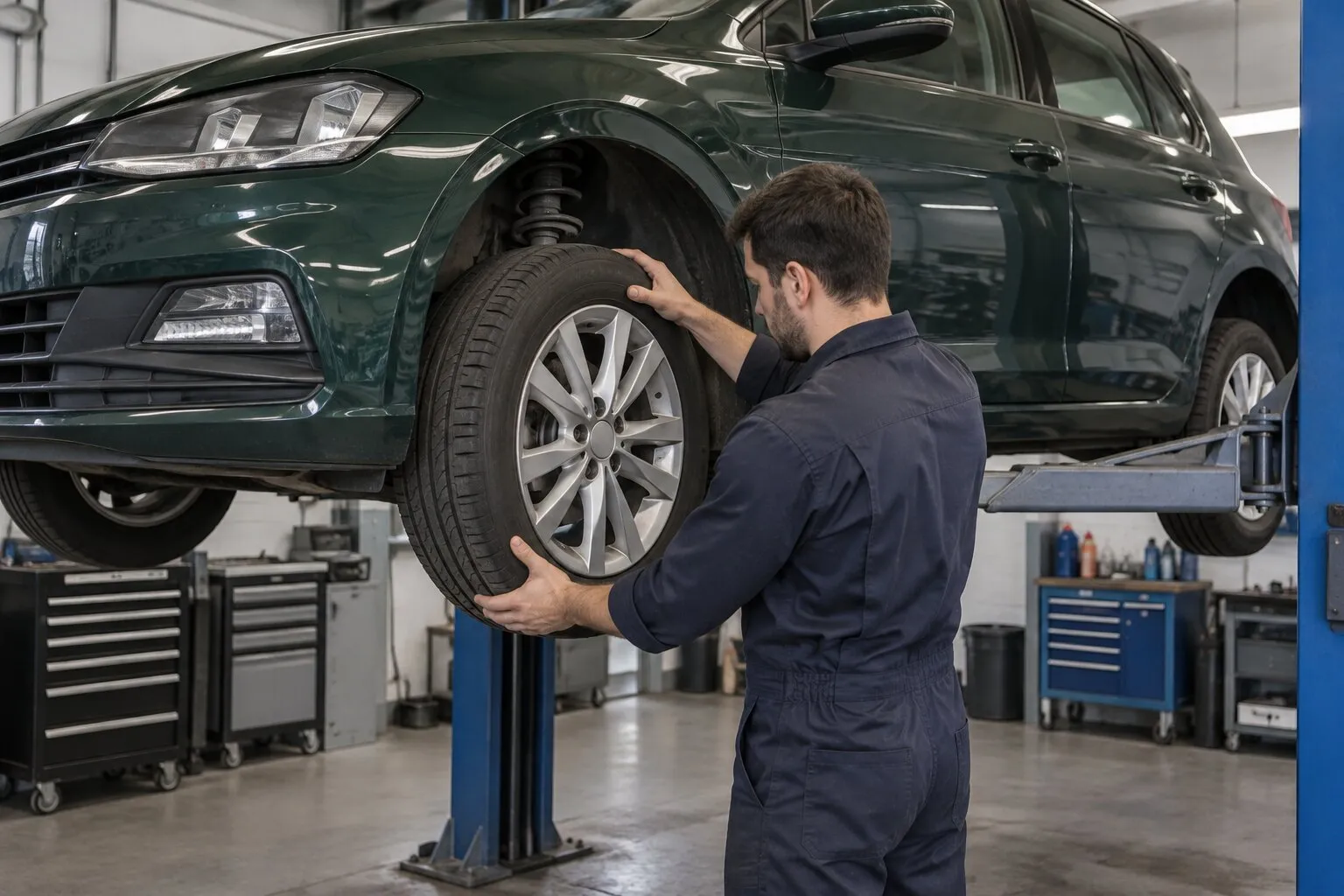
At a full service, and at the MOT, the car is usually raised so the technician can see and test the parts:
- Shock absorbers, for leaks, damage and how well they damp.
- Coil springs, for cracks and breaks, especially at the ends of the coils.
- Suspension arms and bushes, for perished or split rubber and movement.
- Ball joints, for excessive play.
- Drop links and anti-roll bar bushes, a common source of knocking noises.
- Track rod ends and the steering rack, for play and leaks.
- Rubber gaiters on the steering rack and driveshafts, for splits that let dirt in.
- Wheel bearings, for noise and play.
- Power steering fluid, on cars with hydraulic power steering.
Warning Signs of Steering and Suspension Problems
| What you notice | What it may mean |
|---|---|
| Knocks or clunks over bumps | Worn drop links, bushes, ball joints or a broken spring |
| The car pulls to one side | Wheel alignment out, uneven tyre pressures or a worn part |
| Uneven or rapid tyre wear, especially on the edges | Wheel alignment out, or worn suspension parts |
| The car bounces or floats after a bump | Worn shock absorbers |
| The nose dives sharply under braking | Worn front shock absorbers |
| The car sits lower on one corner | A broken or sagging spring |
| The steering wheel is off centre when driving straight | Wheel alignment out, often after a pothole or kerb strike |
| Vague or wandering steering | Worn track rod ends, joints or steering rack |
| A rumble or hum that rises with speed | A worn wheel bearing |
| A clicking noise on full lock | A worn driveshaft joint, often after a split gaiter |
Potholes and Suspension Damage
Potholes are one of the biggest causes of suspension damage in the UK. The RAC attended 26,048 breakdowns in 2025 caused by damaged shock absorbers, broken suspension springs or distorted wheels, an average of 71 a day. It estimates that repairing pothole damage to a typical family car can cost up to £590 for anything worse than a puncture.
If you hit a pothole hard, look for damage to the tyre and wheel, and pay attention to how the car drives afterwards. A new knock, a pull to one side or an off-centre steering wheel means it should be checked. Our guide to checking tyre pressure covers the tyre checks.
Wheel Alignment
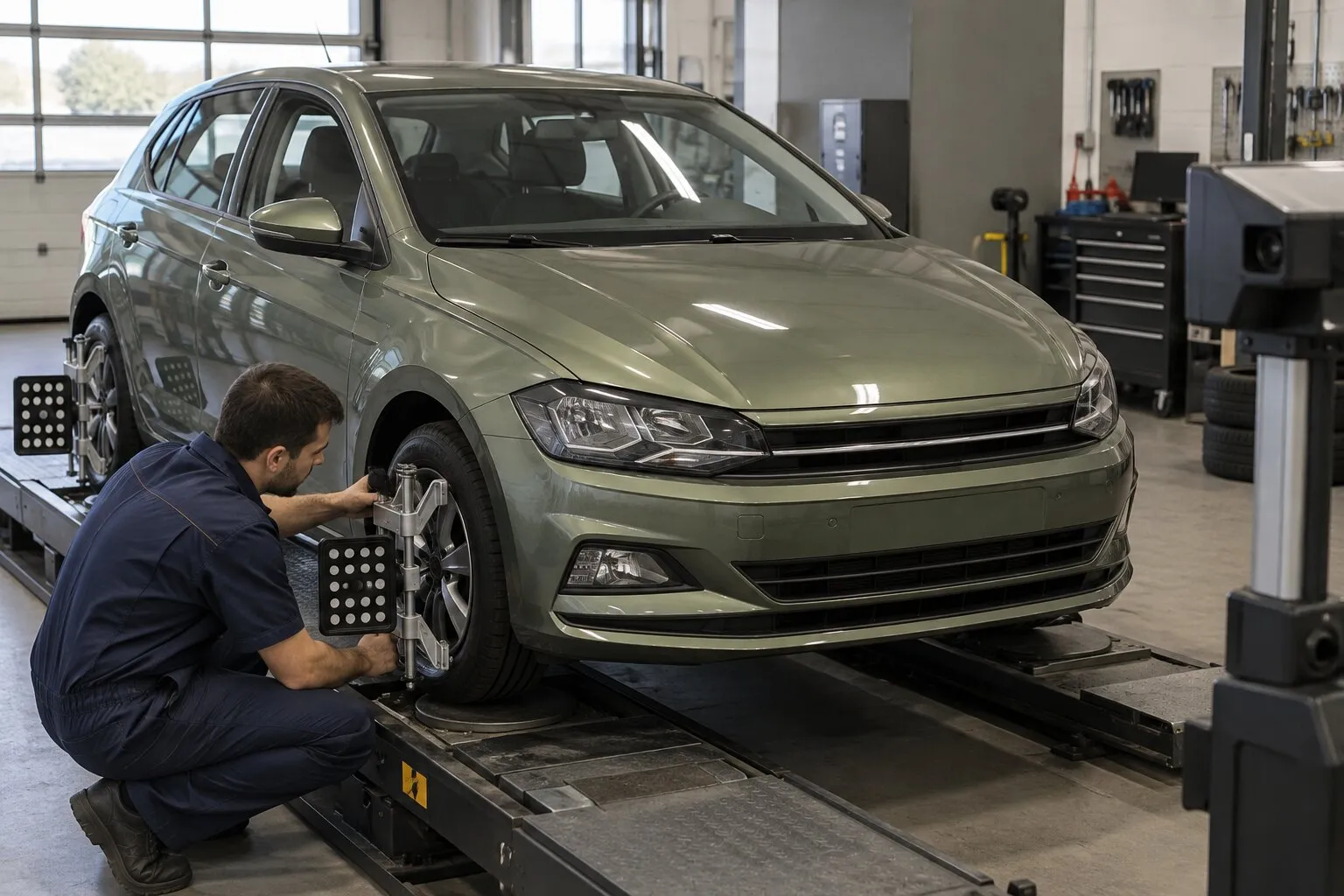
Wheel alignment, often called tracking, sets the angles of the wheels so they point straight and sit square to the road. A hard knock from a pothole or kerb can push it out.
Poor alignment makes tyres wear quickly and unevenly, often on the inside or outside edge, and can make the car pull to one side. Have the alignment checked after hitting a pothole or kerb hard, after replacing steering or suspension parts, and when you fit new tyres.
A front wheel alignment typically costs around £35 to £50. A four-wheel alignment costs around £70 to £80.
Steering and Suspension at the MOT
Suspension has consistently been one of the most common reasons for MOT failure, second only to lighting in DVSA's figures. Some of the key items:
| MOT item | Defect category |
|---|---|
| A spring or spring component fractured or seriously weakened | Major (fail) |
| A shock absorber that does not function, or leaks severely | Major (fail) |
| A shock absorber with negligible damping effect | Major (fail) |
| A shock absorber missing or likely to become detached | Dangerous (fail) |
| A suspension pin, bush, joint or bearing excessively worn | Major (fail) |
| A suspension joint likely to become detached | Dangerous (fail) |
Slight seepage from a shock absorber is not a reason to fail on its own. Many suspension problems appear first as advisories, such as "slight play in track rod end" or "anti-roll bar bush deteriorated". Our free MOT history check shows any past advisories for your car.
What Repairs Typically Cost
Prices vary a lot between cars, but as a rough guide:
- Wheel alignment: around £35 to £50 for the front, £70 to £80 for all four wheels.
- Drop links, bushes and track rod ends: usually among the cheaper suspension repairs.
- Coil springs and shock absorbers: more expensive, and best replaced in pairs across the axle so both sides behave the same.
After replacing steering or suspension parts, a wheel alignment check is usually needed.
How Suspension Work Shows in Your Service History
Steering and suspension repairs appear on invoices as separate jobs, such as "front coil springs replaced" or "nearside track rod end replaced". Add them to your free digital service book alongside the services. The service report should also note the condition of the steering and suspension.
When you are buying a used car, look at:
- MOT advisories for suspension or steering, and whether they were dealt with.
- Invoices for repairs, especially springs and shock absorbers, which are expensive.
- Tyre wear. Uneven wear on the front tyres can point to alignment or suspension problems.
- Recorded services. A Service History Check shows the services logged for the car, so you can see whether it has been inspected regularly.