
Signs Your Car Battery Is Weak
- The engine turns over slowly before it starts, especially on cold mornings.
- The battery warning light comes on, or the dashboard shows a low battery message.
- Lights are dim at idle and brighten when you rev the engine.
- Electrical items misbehave, such as the clock resetting, windows moving slowly or the infotainment restarting.
- Start-stop stops working. Many cars disable it when the battery is weak, as a protection.
- You have needed a jump start recently, without having left anything switched on.
- The battery is more than four or five years old.
Not every warning sign means the battery itself has failed. The same symptoms can come from a faulty alternator, a poor connection or something draining the battery when the car is parked. A test tells you which.
A Quick Visual Check
Open the bonnet and find the battery. On some cars it is in the boot, under a seat or under a cover, and the handbook shows where.
- Look at the terminals. White, green or blue crusty deposits are corrosion, which can stop the battery charging and starting properly.
- Check the clamps are tight. A loose terminal can cause intermittent starting problems. Do not overtighten.
- Look at the case. Cracks, bulges or leaks mean the battery should be replaced.
- Check it is held down. A battery that moves about can be damaged and can short out.
- Look for a date. Many batteries have a date code or sticker showing when they were made or fitted.
If you clean corrosion off, wear gloves and eye protection. Battery acid is corrosive.
How to Test Your Battery Voltage
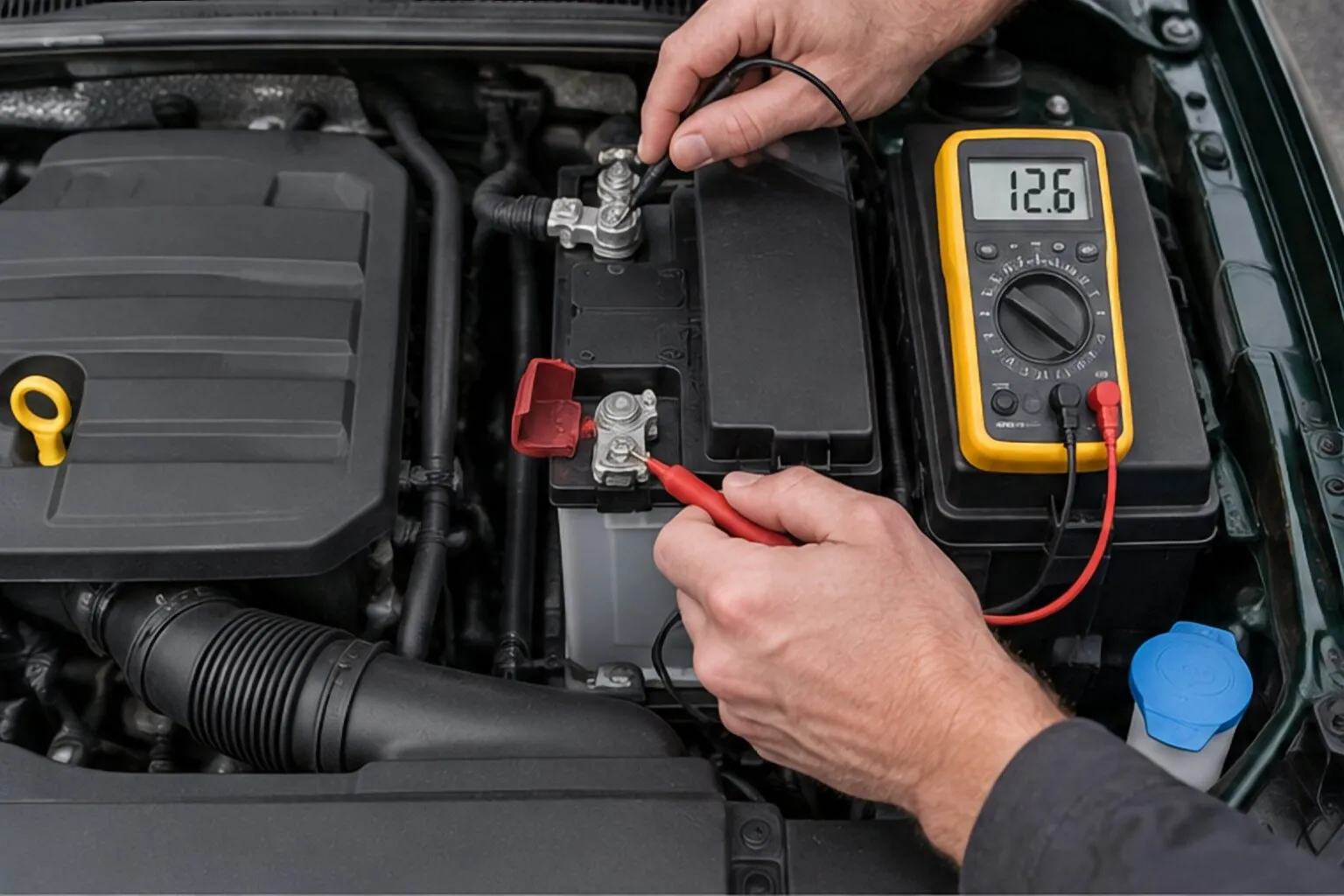
A basic digital multimeter costs a few pounds and gives a useful reading.
Switch everything off and let the car sit for at least an hour, ideally overnight, so you get a true resting voltage.
Set the multimeter to DC volts, on the 20V range.
Touch the red probe to the positive terminal, marked +, and the black probe to the negative terminal, marked -.
Read the voltage and compare it with the table below.
Start the engine and take a second reading with it running. This shows whether the alternator is charging the battery.
What the Readings Mean
| Reading | What it means |
|---|---|
| About 12.6 volts or more, engine off | Fully charged |
| About 12.4 volts, engine off | Around 75% charged. A weak battery that needs charging |
| About 12.2 volts, engine off | Around half charged |
| About 12 volts or below, engine off | Close to flat. It may not start the car |
| 13.7 to 14.7 volts, engine running | The alternator is charging normally |
| Below about 13.5 volts, engine running | The alternator may not be charging properly. Have it checked |
A battery can show a good voltage and still fail when asked to start the engine, because voltage alone does not show how much power it can deliver. A battery that drops quickly after charging, or falls a long way when you start the engine, is probably near the end of its life.
Getting a Proper Battery Test
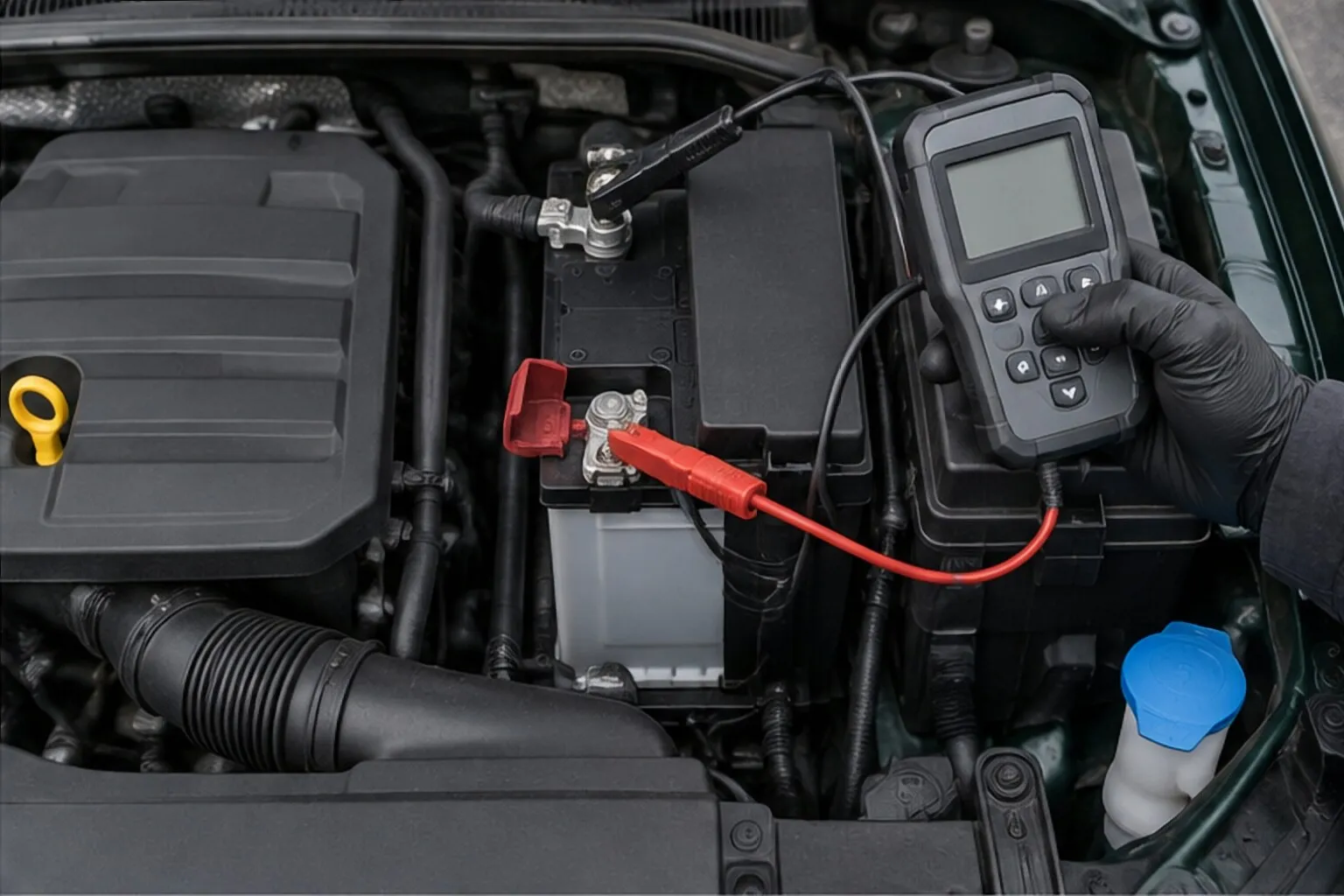
A garage or battery retailer can test the battery under load or with an electronic tester. This shows how much starting power the battery can still deliver compared with when it was new, and whether the alternator and starter are working properly. Many offer the test free.
It is also part of many services. A good service report will note the battery's condition, often as a percentage or a simple good, fair or replace. Keep those reports, and the invoice for any new battery, in your free digital service book. If the report says the battery is weak, it is worth acting before the first cold snap.
Keeping Your Battery Healthy
- Drive for longer now and then. Short journeys do not give the alternator enough time to replace the charge used to start the engine. A longer drive every week or two helps.
- Switch things off before you turn the engine off, especially lights, heated screens and the heater fan.
- Use a smart charger or maintainer if the car is parked for weeks at a time, or if you only do short trips in winter.
- Keep the terminals clean and tight.
- Do not leave the ignition on for long periods with the engine off, for example while sitting in the car with the radio on.
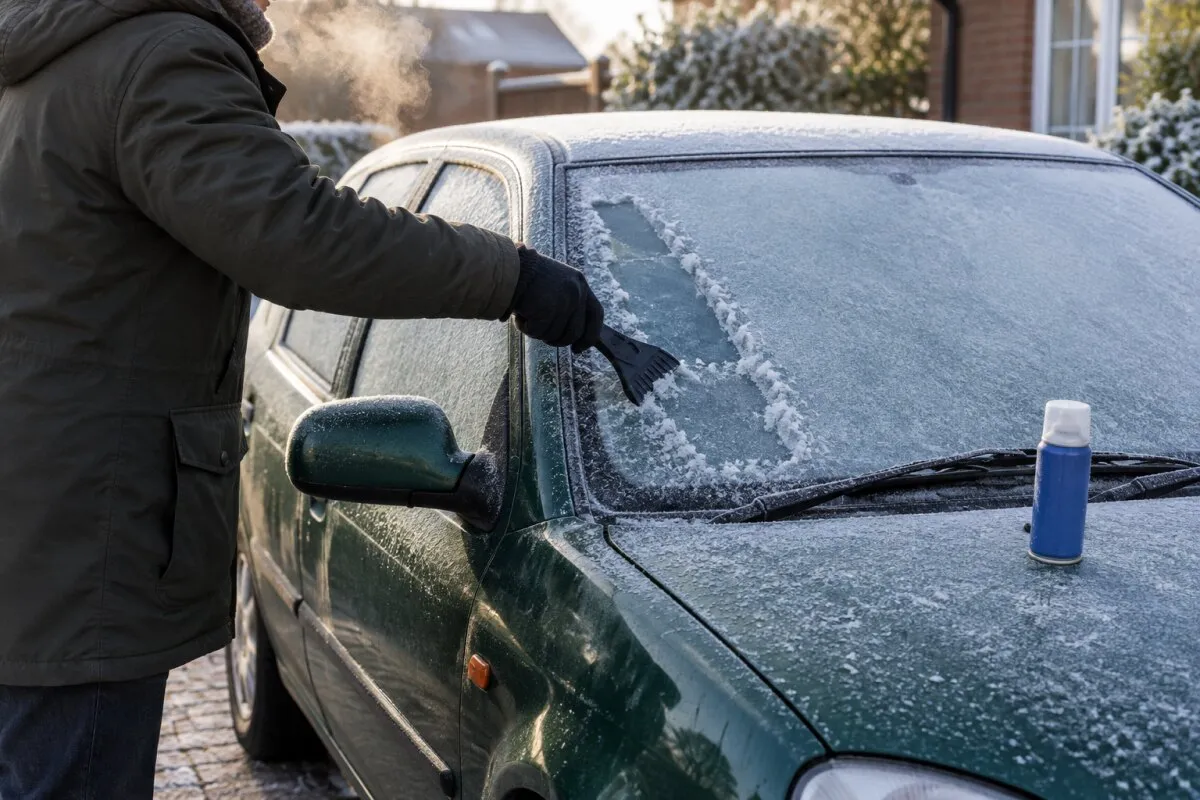
Cold weather is hard on batteries, because the chemical reaction that produces the power slows down, while a cold engine needs more power to start. A battery that has been weak all autumn often fails on the first frosty morning. Our winter car checklist covers the other cold-weather checks.
If the battery does go flat, our guide to jump starting a car explains how to do it safely.
Start-Stop Cars and Battery Registration
Cars with start-stop need a battery built to cope with frequent restarts. There are two main types:
- EFB (enhanced flooded battery), used in many cars with simpler start-stop systems.
- AGM (absorbent glass mat), used in cars with more demanding systems, often those that also recover energy when braking.
Always replace a battery with the same type the car was built with, or the one the handbook specifies. Fitting a standard battery to a start-stop car, or an EFB where an AGM is needed, can shorten its life and stop start-stop working.
Many modern cars also have a battery management system that adjusts how the battery is charged as it ages. When a new battery is fitted, the car may need to be told, using a diagnostic tool, so it charges the new battery correctly. Banner, the battery maker, lists Audi, BMW, Mini, Seat, Skoda and Volkswagen among the brands that recommend or require this. If it is skipped, the new battery may wear out early.
Replacing a Car Battery
On older cars without start-stop, replacing a battery is a simple job with a spanner. Disconnect the negative terminal first and reconnect it last. On modern cars, it is often more involved. The battery may be hard to reach, need registering with the car, or cause the car to lose settings such as radio presets, window positions or the alarm code.
Before you buy a battery:
- Match the type, standard, EFB or AGM, to what the car needs.
- Match the size and rating. The capacity, measured in amp hours, and the cold cranking amps should be at least as high as the original.
- Check whether it needs registering, and whether you have the tool to do it, or whether a garage should fit it.
Old batteries are hazardous waste. A garage or retailer that fits a new battery will usually take the old one, and household waste recycling centres accept them too.
Keep the invoice for a new battery. It shows when it was fitted, which helps you plan the next one, and a buyer can see the battery is not near the end of its life. If you are buying a used car, a Service History Check shows its recorded services, so you can see when it was last with a garage and ask the seller for those invoices, which often include a battery test result.