
Build your car's digital service book
Your paper records, photographed once and kept for good.
Photograph your service book pages and invoices, confirm the records we read from them, and share the result with a link or a PDF.
How It Works
Three steps, and the third one is the important one.

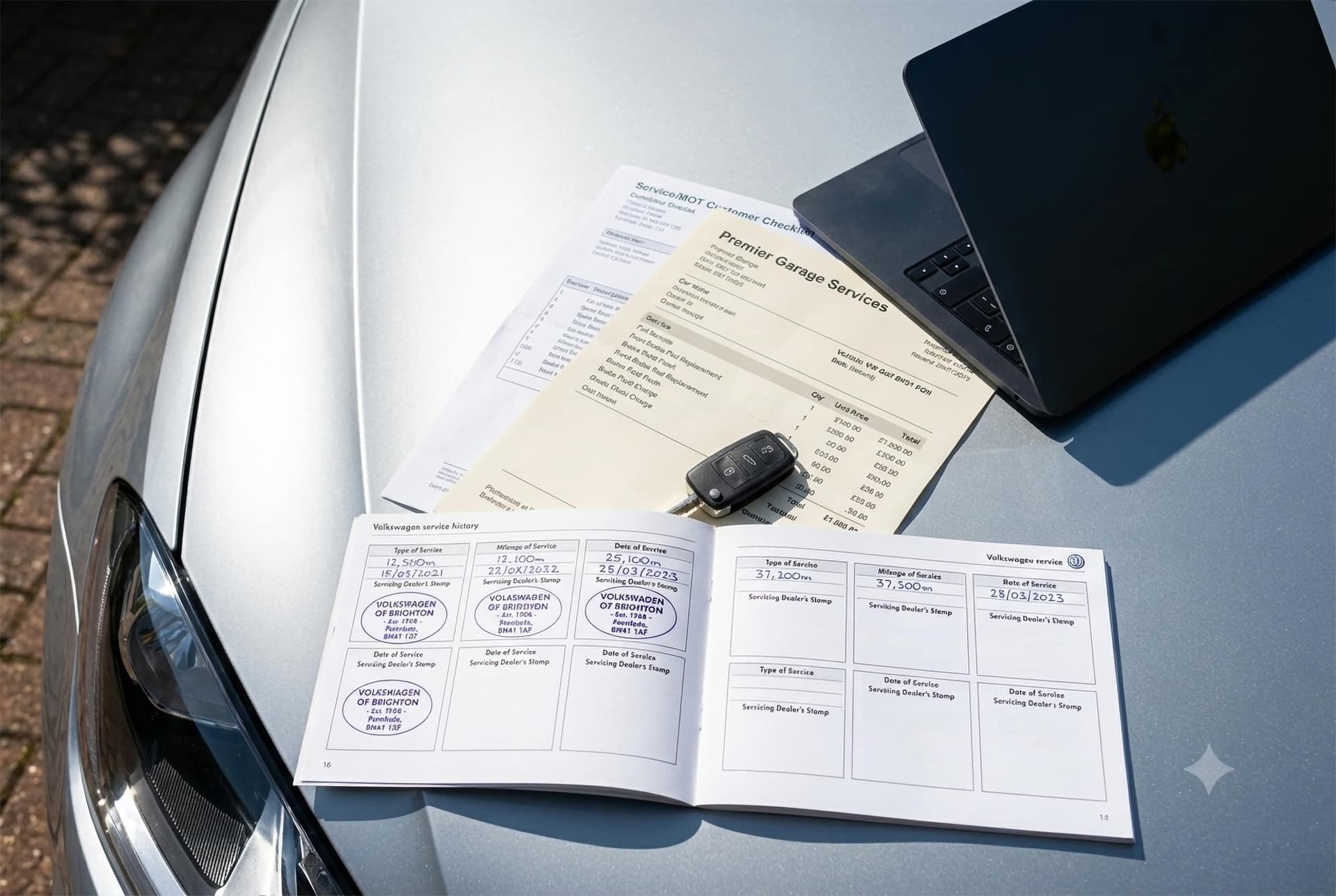
1. Photograph your records
Take a photo of each stamped page of your service book, plus any garage invoices, receipts and job sheets. A phone camera in decent light is all you need.
2. We read them into records
Each document is read and turned into structured records: the date, the mileage, the garage and the work carried out. Handwritten stamps included.

3. You confirm every record
Nothing joins your book on its own. Each proposed record appears beside the image it came from, and you edit it, reject it or confirm it.
Manage Your Service Book Online
The digital service book is an online home for your car's whole service history, built from the documents you already have and kept for as long as you own the car.
On paper, that history lives in the worst possible place: a small booklet in the glovebox and a bundle of invoices in a kitchen drawer. Books get lost in house moves, stamps fade, and previous owners forget to hand anything over. Meanwhile almost half of buyers say they would not even consider a car with an incomplete service history.
Moving the record online fixes the storage problem without asking you to type anything out. Photograph the service book pages and invoices you already have, check the records we read from them, and you have a service history you can share with a link or hand over as a PDF when it is time to sell.
Your book lives in your ServiceStamp dashboard alongside any checks you buy, and every record is labelled with where it came from, so anyone reading it can see exactly what the evidence is.
Not sure where to begin? Learn how to digitise your paper service book, from what to photograph to what happens next.
What Goes In It
Dealer service stamps. The pages of your paper service book, stamp by stamp. Photograph the whole page rather than just the stamp: the date and mileage are usually written in the fields around it, and reading them together gives a much better result.
Independent garage invoices. This is the part no manufacturer database will ever hold. Work done at your local independent is invisible to the dealer network, so if the car has spent its life at an independent garage, your own invoices are the only record of it that exists.
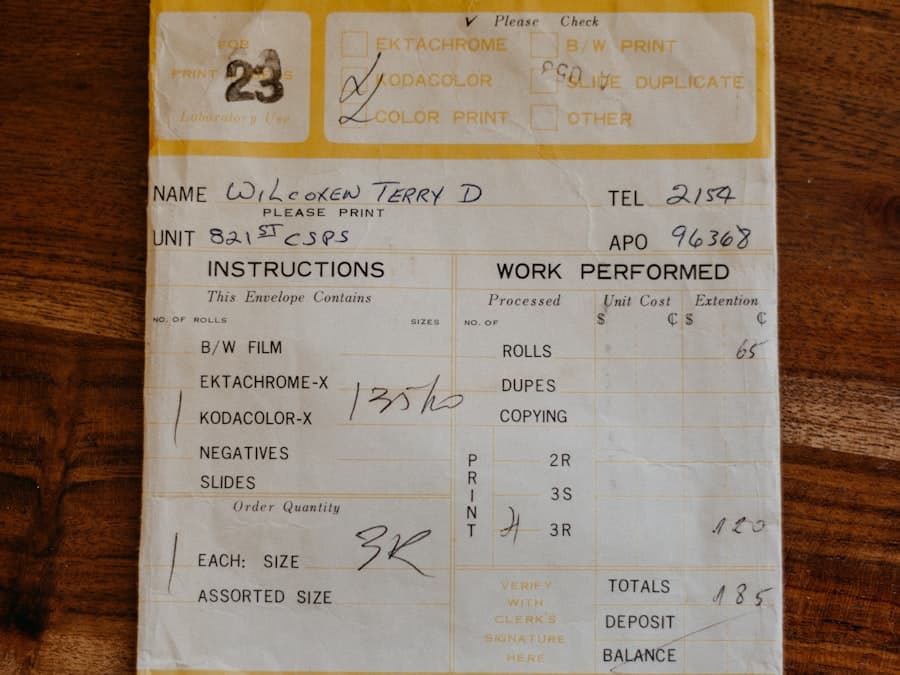
Receipts and job sheets. Cambelt changes, clutches, tyres, brake work, air conditioning regas. Anything with a date, a mileage and a description of the work is worth having in one place, not least because a buyer asking “when was the cambelt done?” is asking about the single most expensive thing you can get wrong on a used car.
Anything that was never written down. You can add a record by hand for work you know was done but cannot document. It is labelled as a manual entry so it is never confused with something backed by an invoice.

Dealer service stamps

Garage invoices
Receipts & job sheets

Manual entries
Where Every Record Came From
The value of a service history is entirely in whether it can be believed, so the book is explicit about the origin of every single entry rather than presenting one smooth timeline and hoping nobody asks.
Read from your document. The record came from a file you uploaded, and it links back to that image. This is the strongest kind of entry in an owner-built book, because there is a document behind it.
Added by hand. You typed it in. Useful and often true, but nobody should mistake it for evidence, so it is labelled.
Edited. A record that came from a document but that you corrected, because the extraction misread a date or a garage name. The original reading is kept underneath.
And the honest headline. Everything in this book is owner provided and not manufacturer verified. Shared books say so on the page. That framing is not a weakness to be hidden, it is what makes the rest of the book credible.
Part of the ServiceStamp Independent Records Database
A confirmed record with a document behind it does more than complete your book. It becomes part of the ServiceStamp Independent Records Database, the first-party database behind the Independent Records Check that runs with every paid ServiceStamp report.
In practice that means a future buyer checking your car can see the servicing you documented: the date, the garage, the work and the mileage. Never your documents, never your identity, never what you paid. Entries typed in by hand stay in your book only, because records without evidence never enter the database, and deleting a document removes its record from the database with it.
It is the part of your effort that outlives your ownership. The independent servicing you photograph today is exactly the history the next keeper of your car will otherwise never be able to prove.
Lost Your Service Book?
You can buy a replacement service book from most manufacturers, and it is worth knowing exactly what turns up: an empty booklet. The history was never in the book itself, it was in the entries, and a fresh set of blank pages restores none of it. Worse, a suspiciously pristine book on a ten year old car makes buyers more nervous, not less.
Rebuilding is slower but it actually works. Start with the invoices you still have, then go back to the garages that did the work. Businesses have to keep their invoice records for 6 years for tax purposes, so a garage can often reprint something from years ago if you ask. For work done at a franchised dealer, the manufacturer's own record is a further route, covered below.
Whatever you recover from those routes has to end up somewhere, and a digital book is a better destination than another paper folder. More on the process in our guides to recovering lost service history and why replacement service books arrive blank.
Start with what you have. One invoice is a better beginning than an empty booklet, and the book grows every time the car is serviced.
Want the Manufacturer's Records Too?
The book you build holds your documents. It does not hold the manufacturer's records, and no amount of uploading will conjure them up. Those are a separate thing, and there are two honest ways to get at them.
Free, through the manufacturer. Most large brands run an owner portal or app where the registered keeper can see servicing carried out in the franchised dealer network. It is free, it is often fiddly, and it usually needs your car registered to your account or a dealer visit to link it. Our guide to the manufacturer portals for the top ten UK brands walks through each one. If you own the car and have the patience, start there.
Paid, in one report. A Service History Check compiles dealer-recorded services from manufacturer sources into a single report, from £12.99, typically for cars from 2012 onwards. It works by registration or VIN, without an owner account, which is why buyers use it. It is a report you buy, not a book you build, and the two do different jobs.
If you do both, they sit together. Records from a check you have bought appear in your book alongside your own, each labelled with its source, and any service that shows up in both is shown once rather than twice.
Why It Is Worth The Half Hour
The case for doing this is not sentimental. Kwik Fit surveyed more than 2,000 UK car owners and found that almost half would not consider a used car with an incomplete service history at all, while those who would still buy one expected an average discount of 19% to take on the risk (Kwik Fit survey).
That discount is not really a judgement on your car. It is the price of uncertainty, and it is what a buyer charges you for not being able to see what has been done. Organised evidence is the only thing that reduces it, which is why a folder of invoices turned into a shareable record is worth an afternoon of your time before you list the car.
It also solves the mundane version of the problem. When the book is digital, you can send a buyer a link instead of meeting them with a carrier bag of paperwork, and the next house move cannot lose it.
How to Upload My Car's Service History
Everything starts with the registration box at the top of this page. Enter your reg, create the book (it is free for your first car), and you land in your dashboard ready to upload. From there it is a matter of photographing what you have: the stamped pages of the paper service book, garage invoices, receipts and job sheets. We accept photos, scans and PDFs, and a phone camera in decent light is fine.
Uploaded documents are read in the background, usually within a minute or two, and turned into proposed records with the date, mileage, garage and work carried out. Nothing joins your book automatically. Each proposal appears beside the image it came from, and you confirm, edit or reject it, so the finished book only ever contains records you have checked yourself.
If you want the finer detail before you start, such as file types and size limits, batch sizes, and how to photograph pages so they read well, our service book support guide covers the whole process step by step, from creating the book to sharing it.
Ready to start? Enter your registration at the top of this page and the book is created in a minute.
Frequently Asked Questions
- Is the service book free?
- Yes for your first car. You can create its book, upload your documents, get the records extracted, share the book and download the PDF without paying anything or entering a card. A book is also included free for every car you run a Service History Check on, and a book for each additional car beyond that is a one-off £4.99. Generous processing limits apply so that one account cannot run up unlimited extraction, and we will tell you plainly if you reach them.
- What can I upload?
- Photos and scans of your service book pages, garage invoices, receipts and job sheets, as JPEG, PNG, WebP, iPhone photos (HEIC) or PDF. A phone camera is fine. Photographing a whole page at a time works better than close-ups of individual stamps, because the page around a stamp usually carries the date and mileage.
- How accurate is the record extraction?
- It reads clear printed invoices very well and handwritten service book stamps well most of the time, but it is not infallible and handwriting varies enormously. That is why nothing is ever added to your book automatically. Every proposed record is shown to you beside the image it came from, and it only becomes part of your book when you confirm it.
- Can a buyer trust a service book I built myself?
- It is honest evidence, not verified evidence, and we label it that way. Every record shows where it came from, whether that is a document you uploaded, an entry you typed or a record you edited, and shared books carry a plain statement that the contents are owner provided and not manufacturer verified. A buyer who wants independent confirmation of franchised dealer work can run a Service History Check, which is a separate paid report sourced from manufacturer records.
- What happens to the photos I upload?
- They are stored privately so you can see each record beside its source document, and they are only used to build your book. They are never shown on a shared book, and deleting a document or your account removes them.
- Do my confirmed records appear anywhere else?
- Confirmed records that have a document behind them become part of the ServiceStamp Independent Records Database, which paid ServiceStamp reports on that car are checked against. A buyer sees the date, garage, work and mileage, and never your documents, your identity or what you paid. Hand-typed entries stay in your book only, and deleting a document removes its record from the database.
- Do I need the paper service book to start?
- No. Plenty of people start with nothing but a folder of invoices, or with a single receipt from last year. A book built from the invoices you do have is worth considerably more to a buyer than no records at all, and you can keep adding to it every time the car is serviced.
- What if my service book is lost?
- Buying a replacement service book from the manufacturer gets you a blank booklet, not your history back. The practical route is to rebuild the record from the evidence that still exists: your own invoices, the garages that did the work, and for franchised dealer servicing the manufacturer record itself. Then assemble it all into one digital book.
Going further: check finance, write-offs and more
Building the book because you are about to sell? Serious buyers will run their own provenance checks on your car, so it is worth knowing what they will find first. These cover finance, write-off, stolen markers and mileage anomalies, none of which a service record can tell you.
Related Guides
Digitise a Paper Service Book
What to photograph, how to photograph it, and what happens next.
Invoices Instead of Stamps
What buyers and dealers actually accept as proof of servicing.
Keeping Service Records
What to keep, how long to keep it, and where it should live.
Filling In a Service Book
The fields, who is allowed to stamp it, and what a stamp proves.
Replacement Service Books
Why a new book turns up blank, and what to do instead.
Manufacturer Service Records
The other route: dealer-recorded servicing, compiled into a report.
Your service history, in one place at last
Photograph what you have, check the records we read from it, and keep the result for as long as you own the car. It is free for your first car, and you can add to it every time the car is serviced.
Start Your Service BookBuying or selling vehicles in volume?
Flat trade pricing from £3.99 per check, plus dedicated support and a team dashboard.