
How to Maintain Your Car
The DIY car maintenance checklist: a weekly, monthly and seasonal plan, every simple job explained and how to record what you do.
Car maintenance guidesMost of what keeps a car safe between services is simple. Tyres at the right pressure, oil at the right level, lights that work and a battery that starts the car on a cold morning. None of it needs a garage, and most of it takes minutes. Here is a weekly, monthly and seasonal checklist, the basic kit to keep at home, every DIY job explained step by step and how to record what you do.
Updated
Your monthly checks:
- Tyre pressures and tread
- Engine oil
- Coolant
- Brake fluid
- Screenwash
- All lights
- Wiper blades
Check the screenwash weekly in winter, and do every check before a long journey.
Nearly half
of faults found at MOTs could be avoided with simple checks and maintenance, says DVSA


Quick Answer
Once a month, and before long journeys, check the tyre pressures and tread, the engine oil, coolant and brake fluid levels, the screenwash and every light. Check the screenwash weekly in winter.
Learn the simple jobs that save a call-out: changing wiper blades and bulbs, using a tyre repair kit, changing a wheel and jump starting a car. Leave brakes, steering and anything you are unsure about to a garage. Keep receipts for parts you fit and log the work in your service book.
Key Takeaways
A monthly walk round the car, with the bonnet up, catches most problems before they become breakdowns or MOT fails.
DVSA has said nearly half of all faults found at MOTs could be avoided with simple checks and maintenance.
Always use the oil, coolant and bulbs your handbook specifies.
Red warning lights mean stop as soon as it is safe. Amber lights mean get the car checked soon.
Tyres, batteries and parts you fit yourself are worth recording, with the receipt, alongside the garage services.
Maintenance and Servicing: the Difference
Servicing
Servicing is the scheduled work done by a garage, or by a capable owner, at set intervals: oil changes, filters, brake fluid and a full inspection. Our guide to how to service your car lists every job in a service.
Maintenance
Maintenance is everything in between. It is the regular checking and topping up that keeps the car safe and legal from one service to the next, plus the small jobs every driver can learn. A car that is serviced every year but never checked in between can still run low on oil, drive on soft tyres or fail its MOT on a blown bulb.

Your Car Maintenance Checklist
Weekly in winter, and before long journeys
Screenwash level, lights, tyres for obvious damage, warning lights on start-up
Monthly
Tyre pressures and tread, engine oil, coolant, brake fluid, screenwash, all lights, wiper blades
Every few months
Battery terminals and condition, the spare wheel or repair kit, the locking wheel nut key
Autumn
Wiper blades, battery health, antifreeze strength, winter kit in the boot
Spring
Tyres and wheels for pothole damage, air con working, salt washed off the underside
Before the MOT
Lights, tyres, wipers, washers, windscreen, mirrors, horn, seatbelts and warning lights
Before a long journey
Everything in the monthly check, plus tyre pressures for a full load and breakdown cover
Every Check and Job, With a Guide for Each
How often to do each one, whether you can do it yourself, and a link to our full step-by-step guide.
| Check or job | How often | Can you do it yourself? |
|---|---|---|
| Regular checks | ||
| How to check tyre pressure | Monthly, with the tyres cold | Yes, with a pressure gauge |
| How to check tyre tread depth | Monthly | Yes, with the 20p test or a tread depth gauge |
| How to check your engine oil | Monthly, and before long journeys | Yes, on level ground with the engine off |
| Coolant and antifreeze | Monthly | Yes, with the engine cold. A level that keeps falling means a leak |
| Brake fluid | Monthly | Check the level yourself. A sudden fall needs a garage straight away |
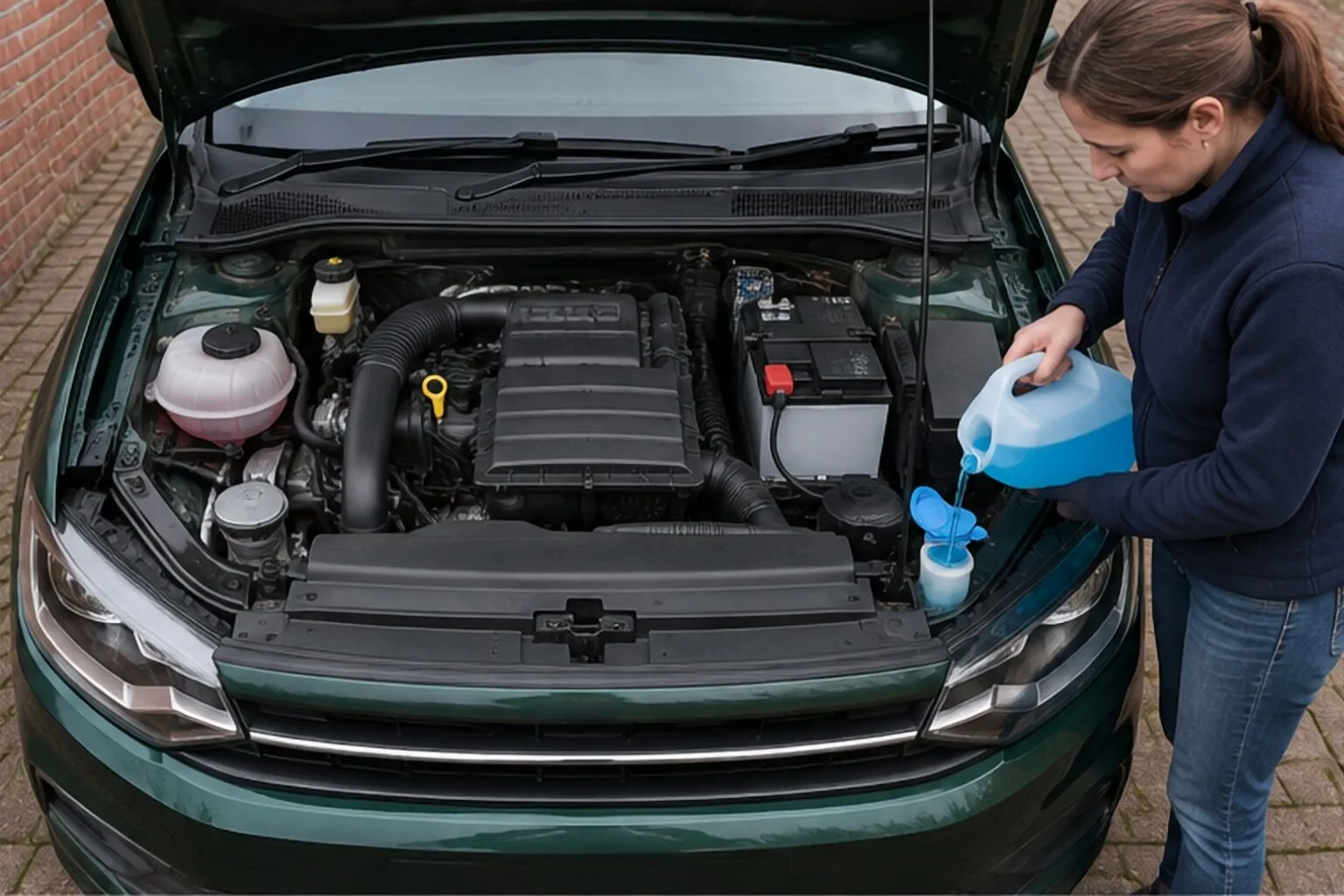
| How to top up screenwash | Monthly, and weekly in winter | Yes, with proper screenwash at the right strength |
| How to check your car lights | Monthly, and weekly in winter | Yes, with a helper or a reflection |
| How to check your car battery | Every few months, and in autumn | Yes, with a multimeter |
| Dashboard warning lights explained | Every time you start the car | Red means stop as soon as it is safe. Amber means book the car in soon |
| Simple jobs you can do yourself | ||
| How to change wiper blades | Once a year, or when they smear or judder | Yes, most unclip in a minute or two |
| How to change a car bulb | When one fails | Many by hand. LED and xenon lights are usually a garage job |
| How to change your air filter | At the interval in your schedule | On many cars, with clips or a few screws |
| How to change your cabin filter | Every year or two | Yes, 10 to 20 minutes on most cars |
| How to top up AdBlue | When the warning appears | Yes, through the blue cap, never the fuel tank |
| How to change a flat tyre | After a puncture | Yes, but never on a motorway hard shoulder |
| How to use a tyre repair kit | After a small puncture in the main tread | Yes, then see a tyre fitter soon |
| How to jump start a car | When the battery is flat | Yes, after checking the handbook for jump points |
| Seasonal checks | ||
| Winter car checklist | Autumn | Yes |
| Pre-MOT checks | Before the MOT | Yes |
| Long journey checklist | Before a long journey | Yes |
- Yes, a DIY job
- Yes, with limits
Some problems should go straight to a professional. See when to call a garage further down this page.
Regular Checks
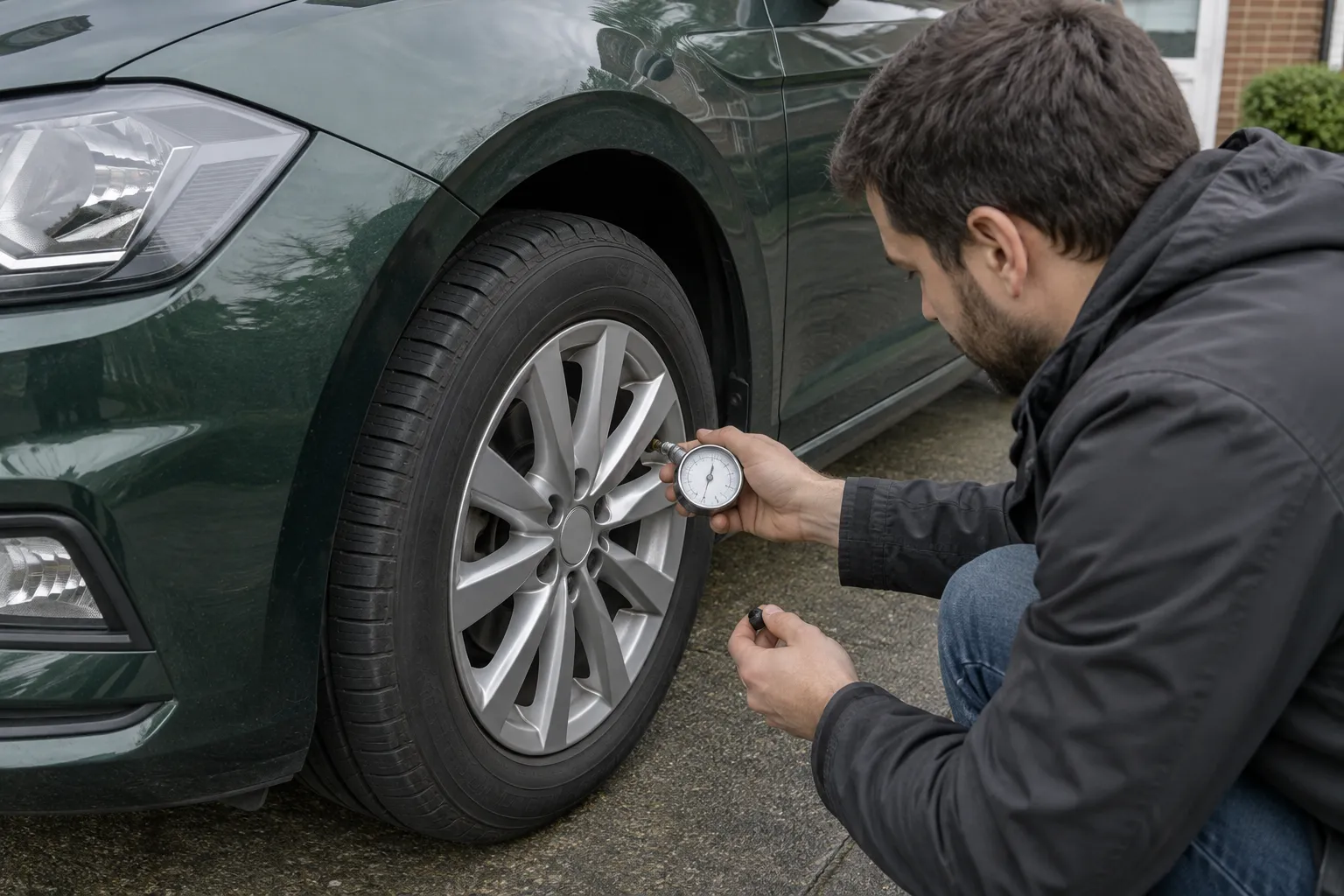

How to check tyre pressure. Check all four tyres, and the spare, once a month with the tyres cold. The right pressures are in the handbook, on a label inside the driver's door or inside the fuel flap. Under-inflated tyres wear faster, use more fuel and handle worse.
How to check tyre tread depth. The legal minimum for a car is 1.6mm across the middle three-quarters of the tread, all the way round. The 20p test gives a quick guide, and a tread depth gauge gives an exact reading. Safety experts recommend replacing tyres at 3mm.
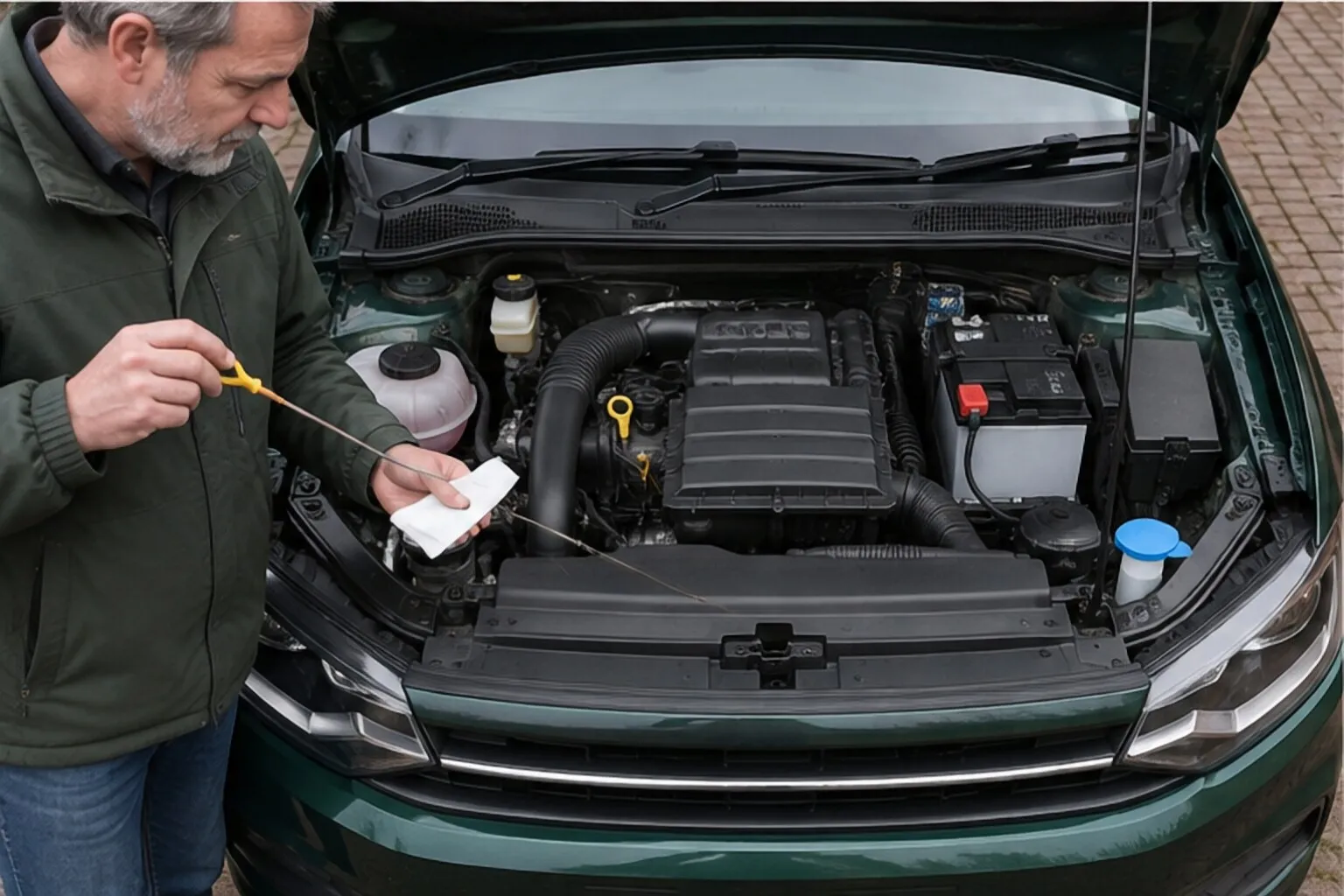
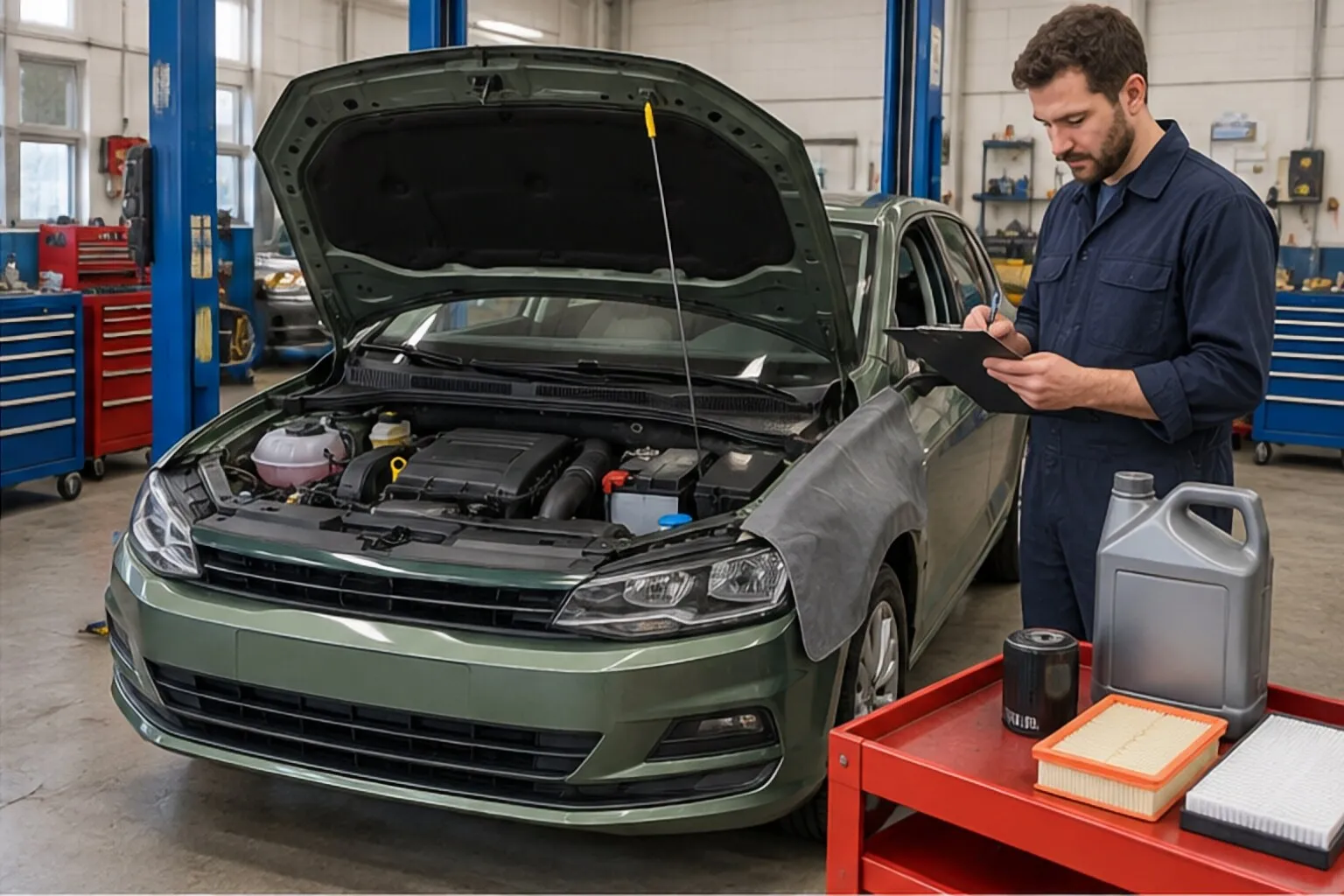
How to check your engine oil. Park on level ground, with the engine off and ideally cold. The oil should sit between the marks on the dipstick, or show as correct on the car's display if it has no dipstick. Top up with the oil your handbook specifies.
Coolant and antifreeze. With the engine cold, the level should sit between the MIN and MAX marks on the expansion tank. Never open the cap when the engine is hot. A level that keeps falling means a leak.
Brake fluid. The level should sit between the marks on the reservoir. It drops slightly as the pads wear, but a sudden fall needs a garage straight away.
How to top up screenwash. Use proper screenwash at the right strength for the season, not plain water or washing-up liquid. Washers that do not work are a major defect at the MOT.
How to check your car lights. Walk round the car once a month with the lights on. Use a reflection in a window or garage door, or a helper, to check the brake and reversing lights.
How to check your car battery. Look for corrosion and loose terminals. With a multimeter, a healthy, fully charged battery reads about 12.6 volts with the engine off. Batteries are one of the most common causes of breakdowns, especially in winter.
Dashboard warning lights explained. Every warning light should come on briefly when you turn the ignition on, then go out. Red means stop as soon as it is safe. Amber means book the car in soon. A flashing light is more urgent than a steady one.
Simple Jobs You Can Do Yourself
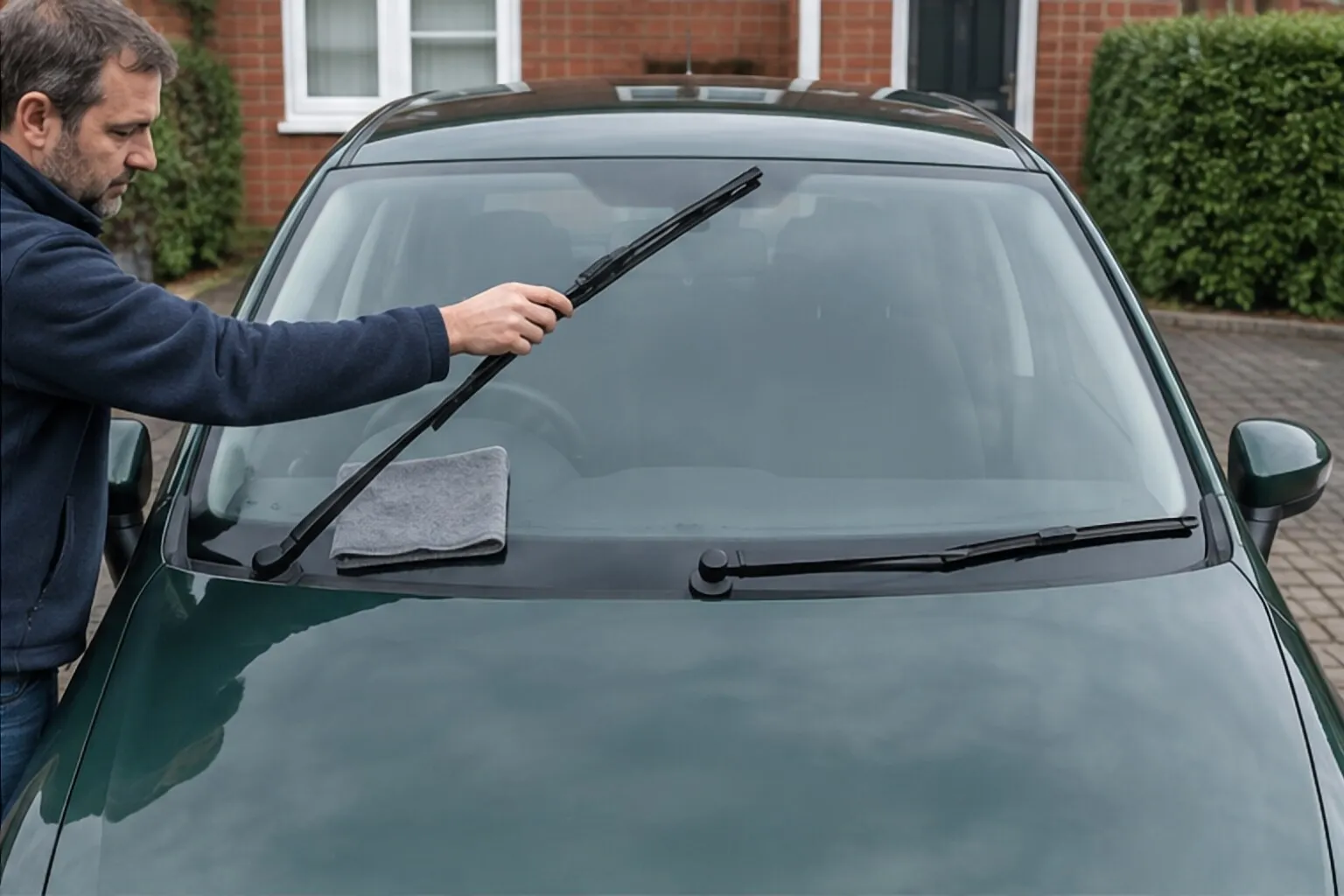
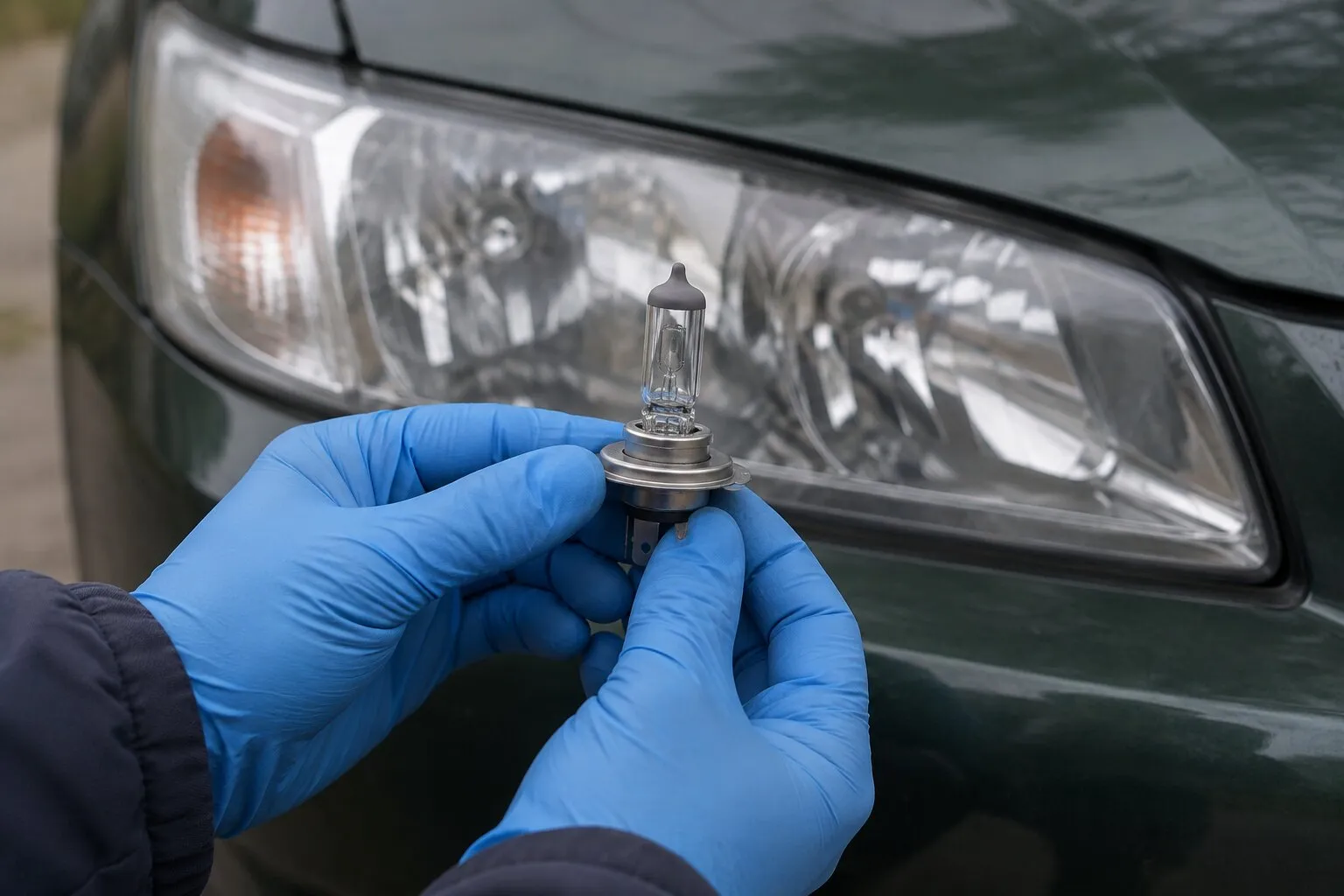
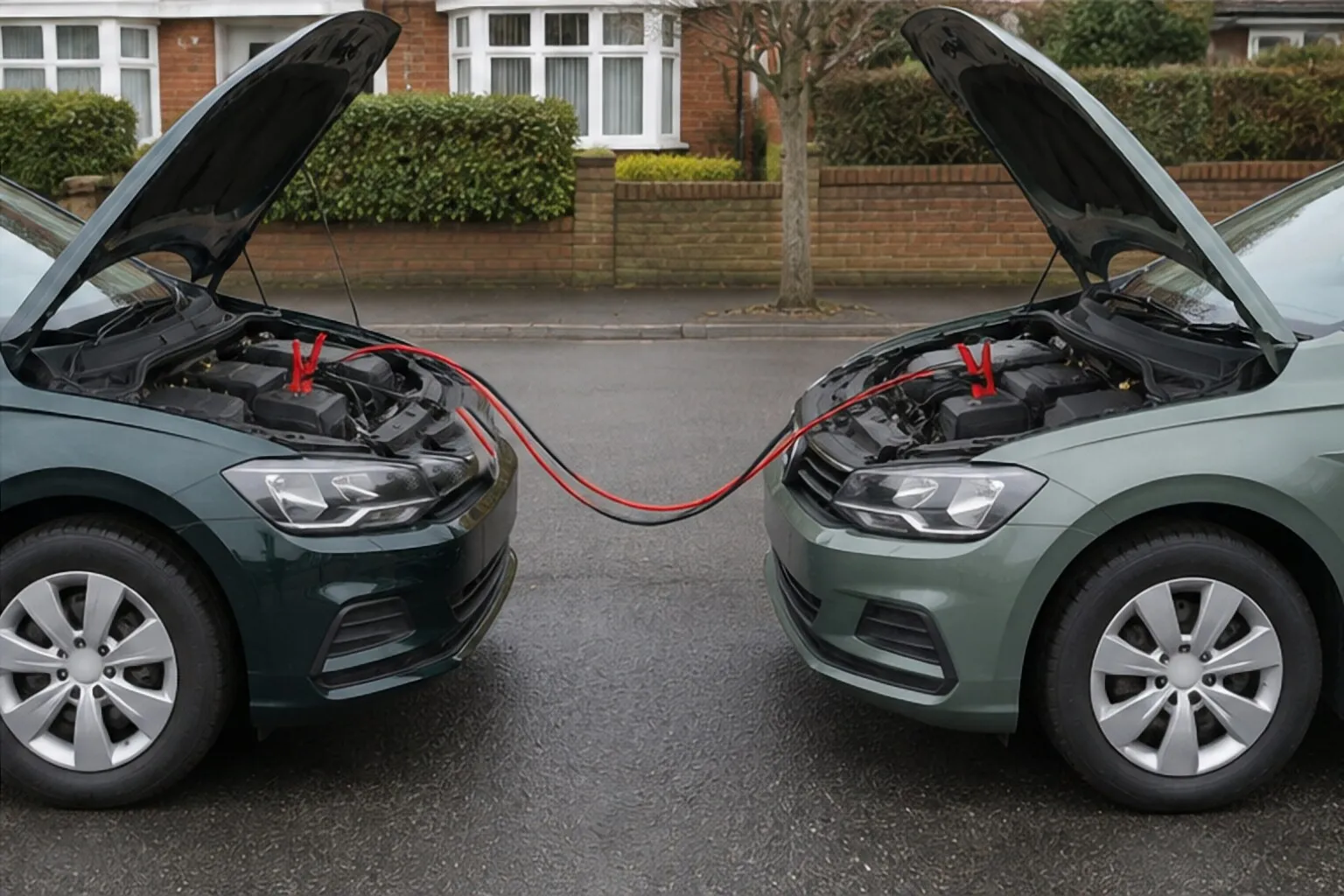
How to change wiper blades. Most blades unclip from the arm in a minute or two. Change them once a year, or as soon as they smear or judder.
How to change a car bulb. Many rear and side bulbs, and some headlight bulbs, can be changed by hand. Change headlight bulbs in pairs. LED and xenon lights, and bulbs reached only by removing the bumper, are usually a garage job.
How to change your air filter. On many cars the air filter box opens with clips or a few screws. Buy the filter for your exact engine, and record the change.
How to change your cabin filter. Usually behind the glovebox or under the windscreen scuttle. It takes 10 to 20 minutes on most cars, and a fresh filter clears musty smells and misting.
How to top up AdBlue. On diesels that use it, fill through the blue cap when the warning appears. Never put AdBlue in the fuel tank.
How to change a flat tyre. Stop somewhere safe and level, well away from traffic. Loosen the nuts before you jack the car up. Never change a tyre on a motorway hard shoulder.
How to use a tyre repair kit. Many cars come with sealant and a compressor instead of a spare. A kit can seal a small puncture in the main tread. Keep below the speed limit on the kit and see a tyre fitter soon.
How to jump start a car. Connect the leads in the right order, red to positive first, then black to bare metal on the car that will not start. Drive for at least 30 minutes afterwards. Check the handbook first, as some cars have their own jump points.
Seasonal Checks
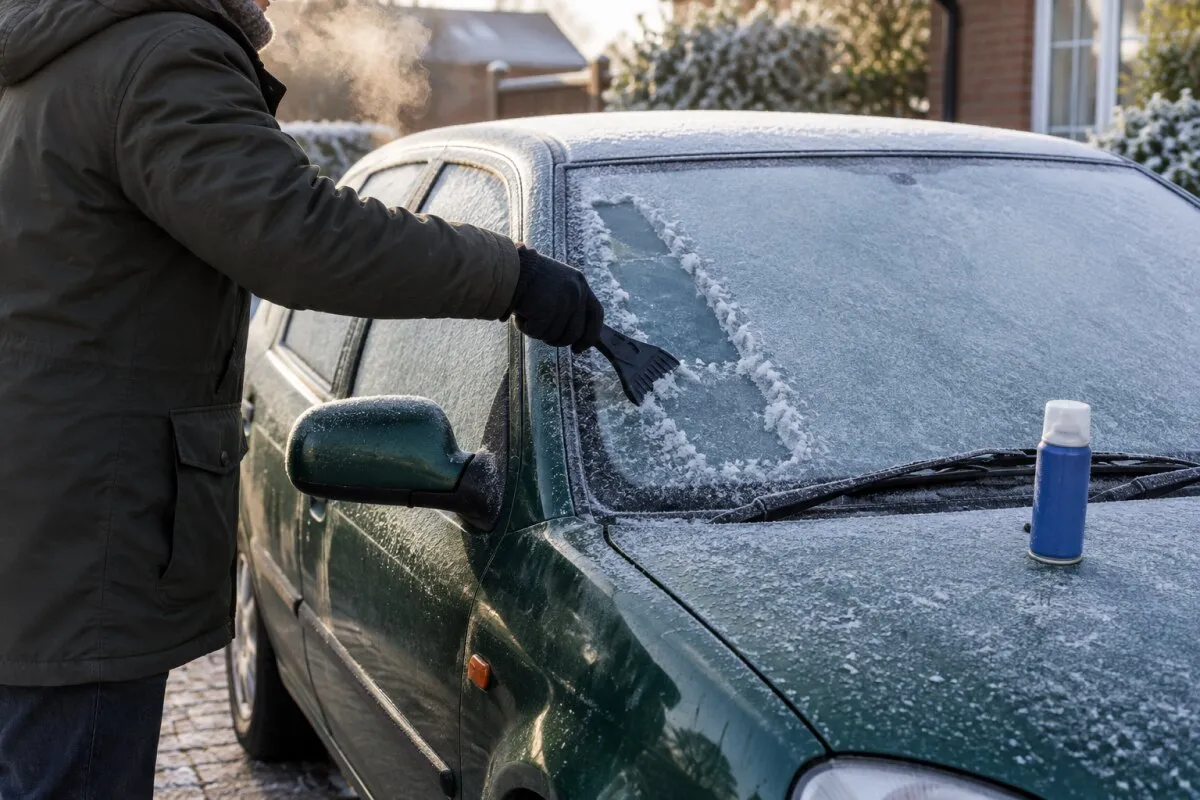
Winter car checklist. Cold weather finds weak batteries, worn wipers and weak antifreeze. Check them in the autumn, keep the screenwash topped up with a winter mix and carry a winter kit.

Pre-MOT checks. The simple checks that avoid easy fails, such as bulbs, wipers, washers and tyres. Look up the car's last MOT advisories, because they are the most likely items to fail this time.

Long journey checklist. Before a road trip, run through the monthly checks, set the tyre pressures for a full load and plan rest stops.
A Basic Car Maintenance Toolkit
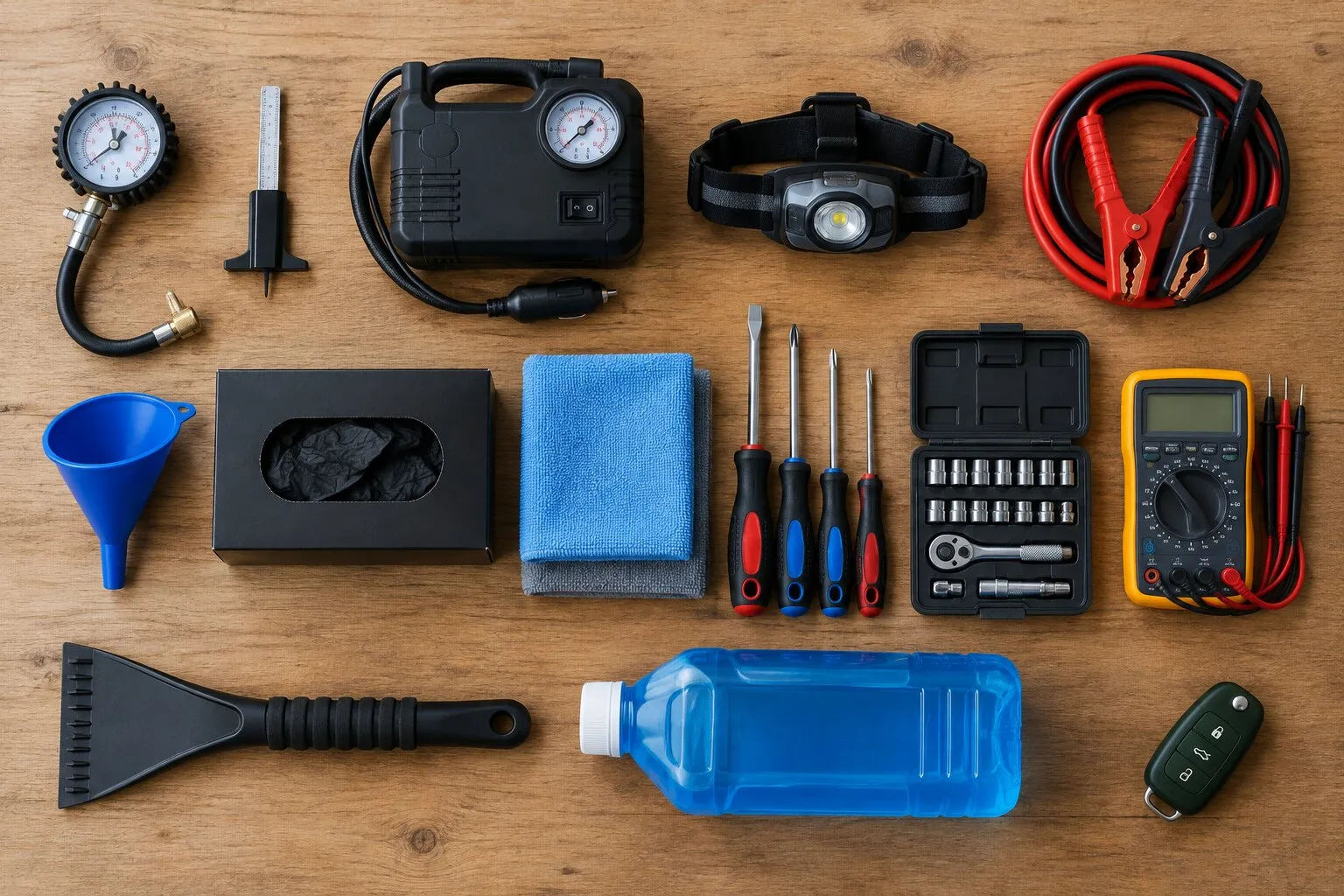
You do not need a full workshop. This kit covers every check and simple job above.
Tyre pressure gauge and a tread depth gauge
A 12V tyre inflator or foot pump
Torch, ideally a head torch
Disposable gloves, a few cloths and a funnel
Jump leads or a jump starter pack
Screwdrivers and a basic socket set
The wheel brace and locking wheel nut key, kept with the jack
A multimeter for checking the battery
Oil and coolant to the specification in your handbook, for top-ups
Screenwash, plus an ice scraper and de-icer in winter
Keep the handbook in the car. It gives the fluid specifications, tyre pressures, bulb types and the location of the jack points and fuses.
When to Call a Garage
| Some problems should go straight to a professional: | |
|---|---|
| A red warning light, especially oil pressure, engine temperature, brakes or charging. | Anything to do with the brakes: a soft or sinking pedal, grinding, pulling to one side or a falling fluid level. |
| Steering and suspension faults: knocks, clunks, vibration or the car wandering. | Leaks that leave puddles, or a fluid level you keep having to top up. |
| Smoke, burning smells or overheating. | High-voltage parts on electric and hybrid cars, which only trained technicians should touch. |
| Any job you are unsure about, or one that needs the car raised beyond changing a wheel. | |
A garage can also do the checks for you. Many will check tyre pressures and test a battery for free.
Logging DIY Work in Your Service Book
Most maintenance checks do not need recording. Parts you fit and work you do yourself are worth logging, because they fill in the gaps between garage services.
| Worth recording | Not usually needed |
|---|---|
| Tyres fitted, with the brand, size and date | Tyre pressure checks |
| A new battery, with the receipt | Screenwash and AdBlue top-ups |
| Air and cabin filters you change | Wiper blade changes |
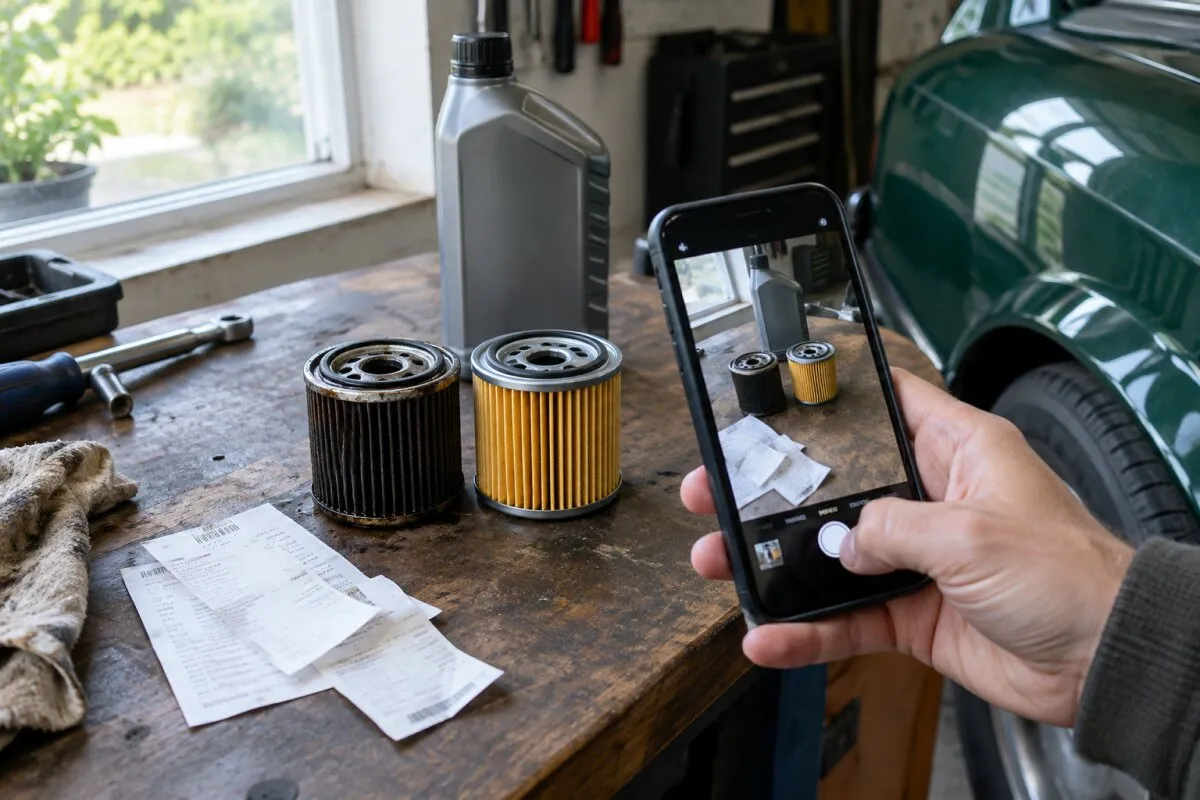
| An oil and filter change done at home | Routine level checks |
| Oil top-ups, if the engine uses a lot | Bulbs, unless part of an MOT repair |
For each one, note the date and mileage and keep the receipt for the parts. A photo of the receipt and the odometer is even better. Never stamp the service book yourself.
Your Digital Service Book
Our free digital service book is built for this. Upload photos or PDFs of receipts and invoices, and they are turned into proposed records you can confirm, edit or reject. Each record is labelled with where it came from, so anyone you share the book with can see what came from a document and what you added by hand.
Our guide to DIY servicing and service history explains how buyers view DIY work.
Frequently Asked Questions
What basic car maintenance should I do?
Check the tyre pressures and tread, engine oil, coolant, brake fluid, screenwash and lights once a month. Learn to change wiper blades and bulbs, use a tyre repair kit, change a wheel and jump start a car.
How often should I check my tyres?
Check the pressures and tread at least once a month, and before any long journey. Look for cuts and bulges whenever you walk round the car.
How often should I check my engine oil?
At least once a month and before a long journey. Some engines use more oil than others, so check more often if you have needed to top up.
What is the difference between car maintenance and a car service?
A service is scheduled work, usually done by a garage, such as oil and filter changes and a full inspection. Maintenance is the regular checking and simple jobs you do in between.
Does doing my own maintenance affect my warranty?
Regular checks and top-ups do not. Servicing the car yourself during the warranty is a different matter, so read our guide to DIY servicing and service history first.
What tools do I need for basic car maintenance?
A tyre pressure gauge, a tread depth gauge, a tyre inflator, a torch, gloves, jump leads and a basic socket set. Keep the handbook in the car too.
Build Your Service Book
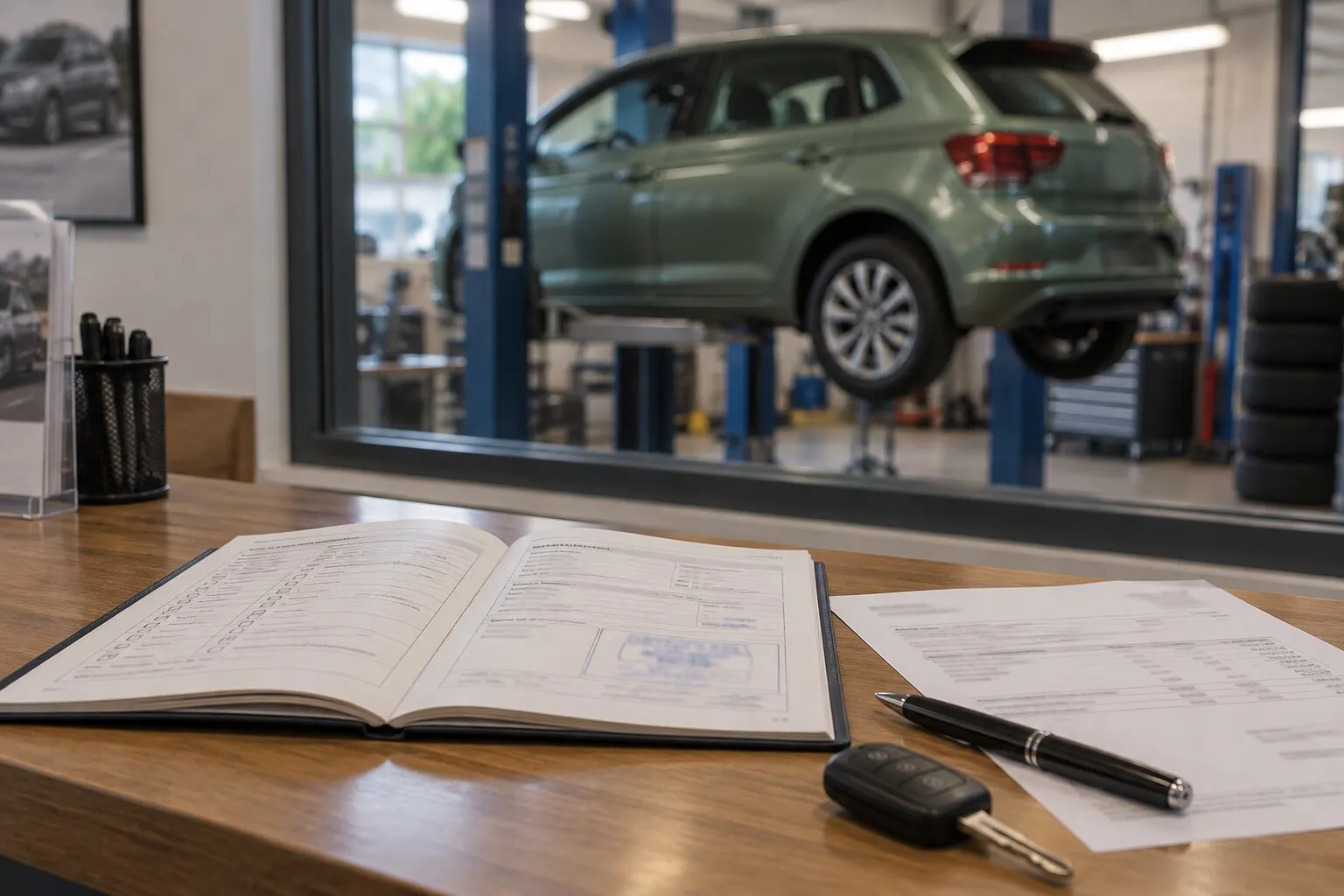
The tyres, batteries and parts you fit yourself are part of your car's story too. Add the receipts to your free digital service book, alongside your garage services, so the full history is ready when you sell.