
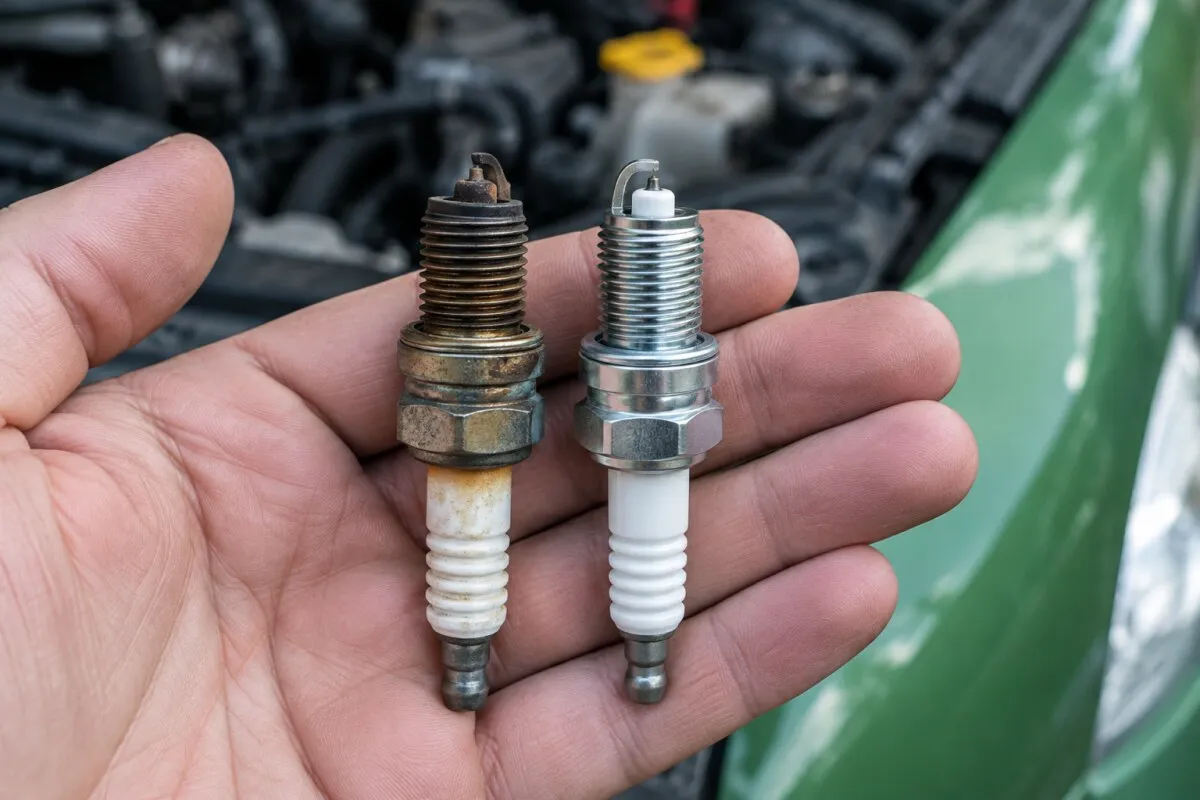

What Spark Plugs Do
A spark plug screws into the top of each cylinder. When the engine's ignition system sends a high-voltage pulse to it, a spark jumps across a small gap at its tip and ignites the compressed fuel and air. A four-cylinder petrol engine has four plugs, one per cylinder.
Over time, the electrodes at the tip wear away and the gap grows. The plug then needs a higher voltage to spark, and eventually it struggles to fire reliably. Deposits can also build up on the tip, especially on engines that do lots of short trips.
Diesel engines do not have spark plugs. They ignite the fuel by compression alone. They have glow plugs to help cold starts, which are only replaced when they fail.
How Often to Change Spark Plugs
The right interval is in your service schedule, and it depends on the engine and the type of plug it uses.
| Plug type | Typical life | Where you find it |
|---|---|---|
| Copper or nickel | About 20,000 to 30,000 miles | Older cars and some performance engines |
| Platinum | About 60,000 miles or more | Many cars from the 1990s onwards |
| Iridium | About 60,000 to 100,000 miles | Most modern petrol engines |
Many manufacturers set a time limit as well as a mileage, so a low-mileage car may still need new plugs after a set number of years. Turbocharged and high-performance engines can need plugs more often than a general figure suggests. Always replace plugs with the type the manufacturer specifies.
Signs Your Spark Plugs Need Changing
- Hard starting, especially from cold.
- Rough idling, with the engine shaking or the revs hunting.
- Hesitation or jerking when you accelerate.
- A lack of power, particularly when overtaking or climbing hills.
- Higher fuel consumption than usual.
- The engine warning light, often with a misfire fault code stored.
These symptoms can have other causes, such as a faulty ignition coil or injector. A garage can read the fault codes and check the plugs. Our guide to dashboard warning lights explains the engine warning light.
What Happens If You Leave Them Too Long
Worn plugs make the engine work less efficiently, but the bigger risk is a misfire. When a cylinder does not fire, unburnt fuel goes into the exhaust, where it can overheat and damage the catalytic converter. A replacement catalytic converter costs far more than a set of plugs.
On most cars, a flashing engine warning light means a misfire severe enough to damage the catalytic converter. Slow down, avoid hard acceleration and get the car checked as soon as you can.
Plugs left in for a very long time can also seize in the cylinder head, which makes removing them harder and more expensive.
What Spark Plug Replacement Costs
Prices vary a lot with the engine. On a simple four-cylinder engine with the plugs on top, it is a short job. On some V6 engines, or engines where the inlet manifold has to come off, it can take hours.
WhoCanFixMyCar's average prices, published by the RAC in 2026, give a guide:
| Make | Average replacement cost |
|---|---|
| Ford | £126 |
| Volkswagen | £137 |
| Mercedes-Benz | £156 |
| Peugeot | £170 |
| BMW | £177 |
| Audi | £186 |
Iridium plugs cost more than copper ones, but they last far longer. If the ignition coils are showing their age, a garage may suggest changing them at the same time.
Changing Spark Plugs Yourself
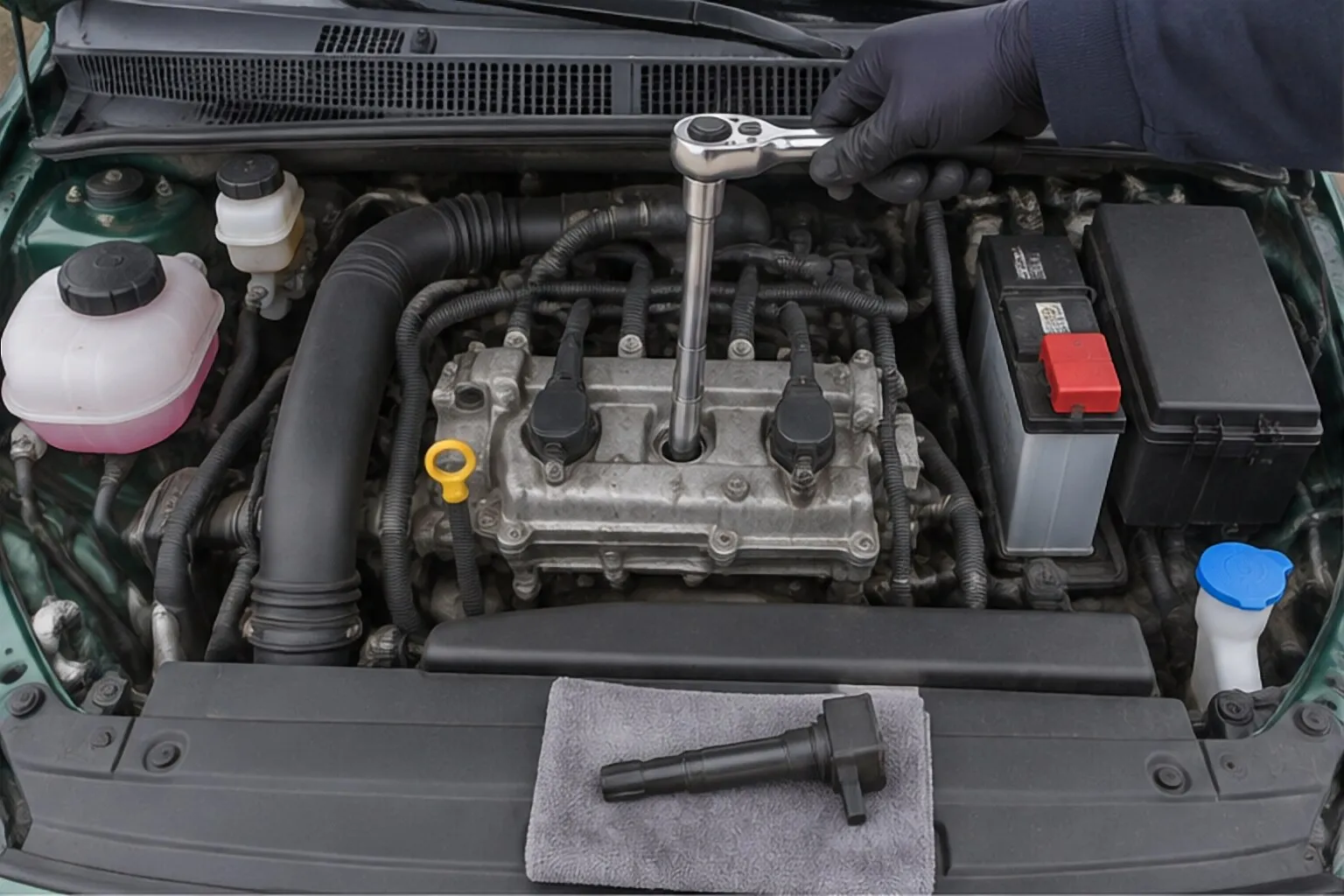
On many four-cylinder engines, changing the plugs is a reasonable DIY job with a plug socket, an extension bar and a torque wrench. On others, the plugs are buried under the inlet manifold or other parts, and it is a job for a garage.
If you do it yourself:
- Work on a cold engine. Removing plugs from a hot aluminium cylinder head can damage the threads.
- Do one plug at a time, so the coils or leads go back on the right cylinders.
- Blow away dirt from around each plug before removing it, so nothing falls into the cylinder.
- Start the new plug by hand to avoid cross-threading, then tighten it to the torque in the workshop manual.
- Do not adjust the gap on iridium or platinum plugs unless the maker says to. They come pre-set, and the fine tip is easily damaged.
Keep the receipt and add it to your free digital service book with the date and mileage. Our guide to DIY servicing and service history explains how to record it.
How a Spark Plug Change Shows in Your Service History
A spark plug change should appear on an invoice as a separate line, ideally with the plug part numbers. When you are buying, a Service History Check shows the services recorded for the car, so you can see whether the plug change came round on time. Because the interval is long, it may only appear once or twice in a car's life.
That makes it easy to miss. Many menu services, including some at the large chains, do not include spark plugs at all, and garages quote them as extra work. A car can have a stamp for every service and still be on its original plugs long after they were due. Our guide to interim, full and major services explains what each service usually includes.
When you are buying a higher-mileage petrol car, work out from the schedule whether a plug change was due, and look for it on the invoices. If there is no record, assume they need doing and factor it into the price.