Vehicle History Check vs Service History Check: Why You Need Both Before Buying a Used Car
By the ServiceStamp Team | Updated May 2026 | 10 min read
Most used car buyers run one check. The smartest buyers run two. Here's what a vehicle history check covers, what a service history check covers, what each one misses, and why doing both is the only way to truly know what you're buying.
In This Guide
- What is a vehicle history check?
- What is a service history check?
- What does a vehicle history check include?
- What does a service history check include?
- What a vehicle history check doesn't tell you
- What a service history check doesn't tell you
- Why a clear history check doesn't mean well maintained
- The risks of running only one check
- How to run both checks before buying
- Frequently asked questions
What Is a Vehicle History Check?
A vehicle history check, often called a car history check, provenance check, or reg check, is a report that reveals the legal and financial status of a vehicle. It searches multiple official databases using the car's registration number or VIN (Vehicle Identification Number) and returns information about things you can't see from a physical inspection or a test drive.
Multiple providers offer equivalent checks, including the AA, RAC, carVertical, CarVeto, and others. Whatever the branding on the report, the underlying product is the same: a background check on the car's legal and financial record.
A vehicle history check is primarily designed to protect you from fraud and financial risk when buying a used car. It tells you whether the car is stolen, whether it has outstanding finance, whether it's been written off, and whether the mileage appears to have been tampered with.
At ServiceStamp, we now offer both vehicle history checks and service history checks, giving you a complete picture of any used car before you buy.
What Is a Service History Check?
A service history check is a different kind of report entirely. Rather than revealing the car's legal and financial status, it reveals its maintenance record, how the car has been looked after throughout its life.
A service history check shows whether the car has been serviced at the correct intervals, at which garages, at what mileages, and whether key maintenance items such as oil changes, brake fluid replacements, filter changes, and timing belt work have been carried out and documented.
ServiceStamp specialises in service history checks. We retrieve official manufacturer dealer service records using the car's registration number, giving you an independent view of the car's maintenance history in minutes, without a dealer visit or ownership verification.
The two checks answer completely different questions:
- Vehicle history check: is this car safe to buy legally and financially?
- Service history check: is this car safe to buy mechanically?
Both questions matter. Most buyers only ask one of them.
What Does a Vehicle History Check Include?
A comprehensive vehicle history check typically covers the following:
Outstanding finance. Checks whether the car is subject to an active PCP, HP, or logbook loan agreement. If outstanding finance exists, the finance company legally owns the vehicle and can repossess it from you even after you've paid in good faith. This is one of the most common and costly traps for private buyers. According to figures reported by Auto Express, roughly 1 in 3 used vehicles checked had some form of issue that could have cost the buyer dearly.
Stolen vehicle check. Checks the car's registration against the Police National Computer (PNC) and the Motor Insurance Anti-Fraud and Theft Register (MIAFTR). A stolen car will be seized by police when identified, regardless of whether you bought it legitimately.
Insurance write-off check. Reveals whether the car has ever been declared a total loss by an insurer, and which category it falls into:
- Category A: must be crushed. Should never appear for sale.
- Category B: body shell crushed; salvageable parts only. Cannot return to road.
- Category S (formerly Cat C): structural damage. Can be repaired and returned to the road, but the marker is permanent.
- Category N (formerly Cat D): non-structural damage. Can be repaired and returned to the road, but the marker is permanent.
Mileage check. Cross-references recorded mileages from MOT tests, DVLA records, and the National Mileage Register to identify clocking, the illegal practice of winding back or tampering with the odometer to make a car appear lower-mileage than it is.
MOT history. Every MOT result, advisory notice, and recorded mileage from the DVSA database. Provides an independent mileage trail and reveals patterns of recurring advisories.
Previous keepers. The number of registered owners, sourced from the DVLA, and how long each kept the vehicle. Multiple short-term owners can indicate problems.
VIN verification. Confirms the Vehicle Identification Number matches across the car's plates, the V5C, and official records, a basic but important fraud check.
Number plate and colour changes. Records of previous registrations and colour changes. Multiple rapid plate changes can indicate a car with a history being obscured.
Import/export status. Whether the car has been imported to or exported from the UK, relevant for insurance, parts availability, and warranty purposes.
Safety recall status. Whether the car has any outstanding manufacturer safety recalls that haven't been completed.
What Does a Service History Check Include?
A service history check covers the maintenance record of the vehicle, information that no vehicle history check provider includes.
A ServiceStamp service history check retrieves official manufacturer dealer records and shows:
Service dates and mileages. When the car was serviced, at what mileage, and how consistently. Gaps of more than 18 months are a concern on most mainstream cars.
Servicing garage details. Which garage carried out each service, whether a franchised dealer or a recorded independent garage. Verifiable entries from named garages carry significantly more weight than anonymous records.
Service type. Whether each visit was an oil service, an interim service, a full service, or a major service, and what was covered.
Key maintenance items. Evidence of brake fluid replacements (due every two years), timing belt changes (on applicable engines), filter replacements, and other scheduled maintenance.
Mileage consistency. The mileage recorded at each dealer service can be cross-referenced against the MOT history, two independent mileage trails that, if they don't match, are a clear warning sign.
Gaps and missing entries. The absence of service records is as informative as their presence. A car with no recorded services for three years on a diesel engine is telling you something important.
What a Vehicle History Check Doesn't Tell You
This is the part most buyers don't realise, and it's why running only a vehicle history check leaves a significant gap in your knowledge.
A vehicle history check does not tell you:
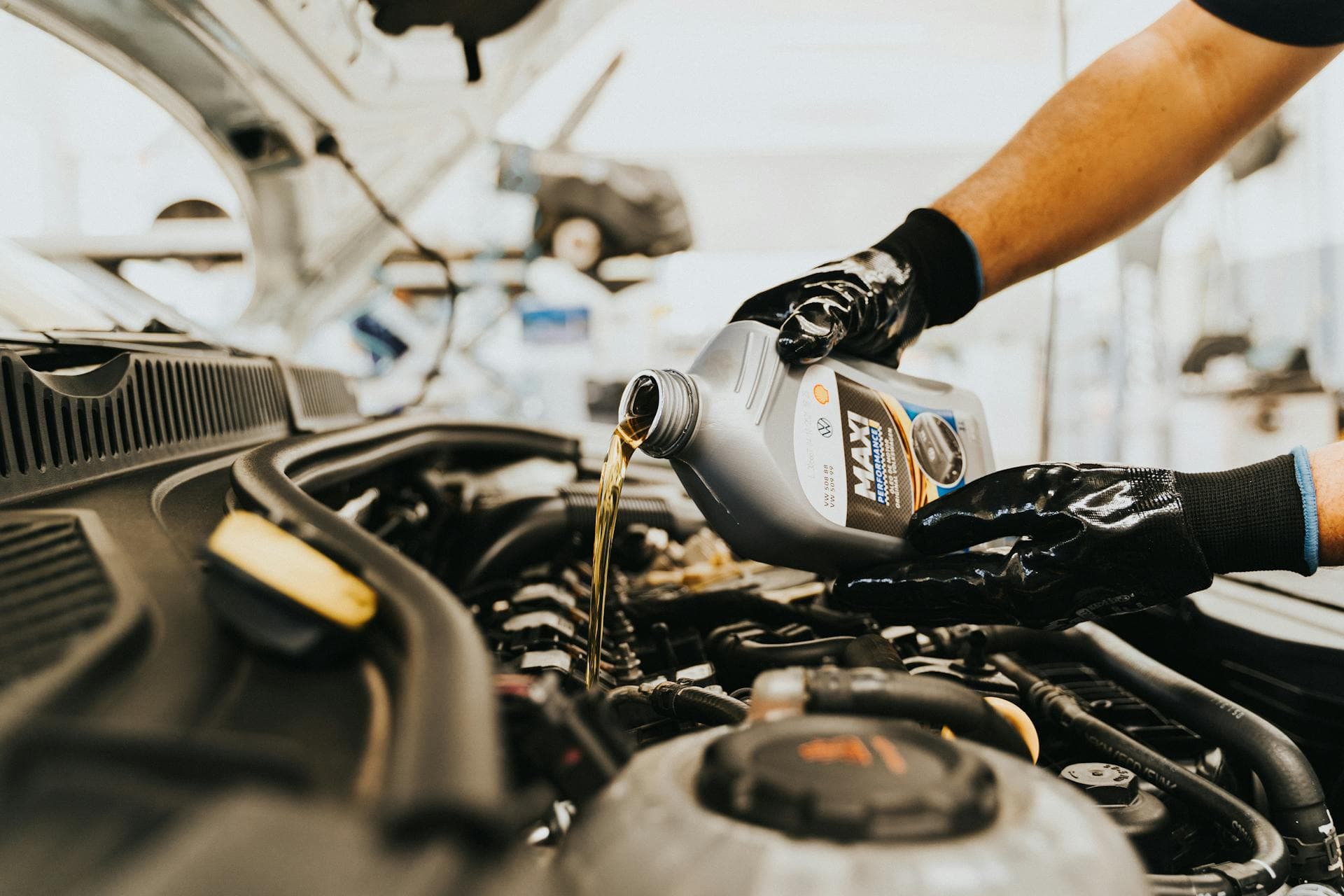
- Whether the engine oil has ever been changed
- Whether the car has been serviced at the correct intervals
- Whether the brake fluid has been replaced (a safety-critical item due every two years)
- Whether the timing belt has been done at the right mileage
- Whether the previous owner used the correct grade of oil and parts
- Whether the car has been maintained at all between MOTs
The providers themselves confirm this clearly: standard vehicle history checks do not include service records.
A car can pass every single vehicle history check, no finance, not stolen, no write-off, correct mileage, and still have never had an oil change in five years. It can come back completely clear and be on the verge of a timing belt failure. It can have a clean police record and catastrophically degraded brake fluid.
The vehicle history check tells you about the car's past on paper. The service history check tells you whether anyone actually looked after the engine.
What a Service History Check Doesn't Tell You
In the spirit of being balanced, a service history check has its own limitations. It does not tell you:
- Whether the car is stolen
- Whether there is outstanding finance attached to it
- Whether it has been written off in an accident
- The number of previous owners
- Whether the mileage has been clocked
This is precisely why both checks are needed. They are complementary, not interchangeable.
Why a Clear History Check Doesn't Mean Well Maintained
"History clear" is one of the most misunderstood claims in the used car market. When a seller says a car has a clear history check, or shows you a certificate confirming it, what they're telling you is that no finance, theft, or write-off record was found on the databases checked at the time of the report.
What a clear history check does not mean:
- The car has been serviced regularly
- The oil has been changed on time
- The brake fluid is safe
- The timing belt has been replaced
- The car is in good mechanical health
- The seller has been honest about its history beyond what databases record
A car can have a completely clear history check and be in appalling mechanical condition. The two things are unrelated.
This matters because many buyers, particularly private buyers purchasing their first used car, see "history checked and clear" in an advert and assume it means the car is clean in every sense. It doesn't. It means the databases were searched and nothing flagged. That's an important and useful thing to know. But it's only half of what you need to know.
The Risks of Running Only One Check
If you run only a vehicle history check. You'll know the car isn't stolen and doesn't have finance. But you won't know if it's been properly maintained. You could be buying a car with degraded oil, missed services, and a timing belt that's thousands of miles overdue, none of which appears on any database.
If you run only a service history check. You'll know how the car has been maintained. But you won't know if there's outstanding finance on it that could result in repossession. You won't know if it's been written off and poorly repaired. You won't know if the mileage has been wound back.
If you run both. You have a genuinely complete picture of the car: its legal and financial status, and its mechanical care. Together, the two checks cover every significant risk a used car buyer faces. And together, they typically cost less than a tank of fuel.
How to Run Both Checks Before Buying
ServiceStamp is one of the only providers in the UK offering both checks in one place. Here's how to use them:
Step 1: Run the vehicle history check. Enter the registration number and receive a comprehensive report covering outstanding finance, stolen status, write-off history, mileage verification, MOT history, previous keepers, and more.
Step 2: Run the service history check. Enter the same registration number and receive an instant report of official manufacturer dealer service records from 2012 onwards. See when the car was last serviced, at what mileage, and whether there are any concerning gaps.
Step 3: Cross-reference the mileage. Compare the mileage shown in the service history records against the mileage shown in the MOT history. Two independent trails that don't match each other, or that don't match the current odometer, is a serious red flag.
Step 4: Use the results to inform your viewing. Both reports should be reviewed before you visit the car. They tell you what questions to ask the seller, what to look for on the day, and whether to negotiate the price based on missing maintenance.
Step 5: View, test drive, and inspect. No check replaces a physical inspection. For higher-value cars, a pre-purchase inspection by a qualified mechanic is a worthwhile additional step.
Frequently Asked Questions
What is the difference between a vehicle history check and a service history check? A vehicle history check reveals a car's legal and financial status: stolen, finance, write-off, mileage, previous owners. A service history check reveals its maintenance record: when it was serviced, where, and what was done. Both are essential when buying a used car. ServiceStamp offers both.
Does a vehicle history check include service history? No. The providers themselves confirm that their checks do not include service records. A vehicle history check, from any provider, only searches legal and financial databases. To check the service history, you need a dedicated service history check.
What does a "clear" history check mean? It means the databases searched at the time of the check showed no outstanding finance, theft record, or write-off marker. It does not mean the car is in good mechanical condition or has been properly maintained.
How much does a vehicle history check cost? Most UK providers charge between £5 and £20 for a full vehicle history check. ServiceStamp offers both a vehicle history check and a service history check, giving you complete coverage for a modest combined cost.
What is the Police National Computer (PNC)? The PNC is the central database used by UK police forces to record stolen vehicles. A vehicle history check searches this database to confirm whether a car has been reported stolen and not recovered.
What are Cat S and Cat N write-offs? Cat S means the car has been written off with structural damage, to the chassis, crumple zones, or body frame. Cat N means non-structural damage such as cosmetic, electrical, or suspension issues. Both can be repaired and returned to the road legally, but the write-off marker is permanent and must be disclosed when selling.
What is clocking? Clocking is the illegal practice of reducing or tampering with a car's recorded mileage to make it appear lower-mileage than it is. A vehicle history check cross-references mileages from MOT records and other sources to identify discrepancies.
Can I run a free vehicle history check? A free check using the DVLA's tools will return basic vehicle details, current MOT status, and road tax status. It does not include outstanding finance, stolen status, or write-off checks, these require a paid check. The GOV.UK MOT history service is also free and provides mileage records for every MOT.
Why should I check service history when buying a used car? A service history check tells you how the car has been maintained, something no vehicle history check covers. It reveals whether oil changes were done on time, whether brake fluid has been replaced, and whether there are gaps in the maintenance record. A car with poor service history is significantly more likely to develop expensive mechanical problems.
Related Guides
- What is a full service history?: understanding FSH and why buyers pay more for verified maintenance records.
- Complete guide to vehicle service history: a step-by-step guide to reading records and spotting red flags.
- Check service history before buying a used car: a pre-purchase walkthrough for buyers.
- How to spot fake service history: red flags and verification tips for service records.
ServiceStamp is one of the only UK providers offering both vehicle history checks and service history checks in one place. Run both before you buy, it takes minutes and could save you thousands.